

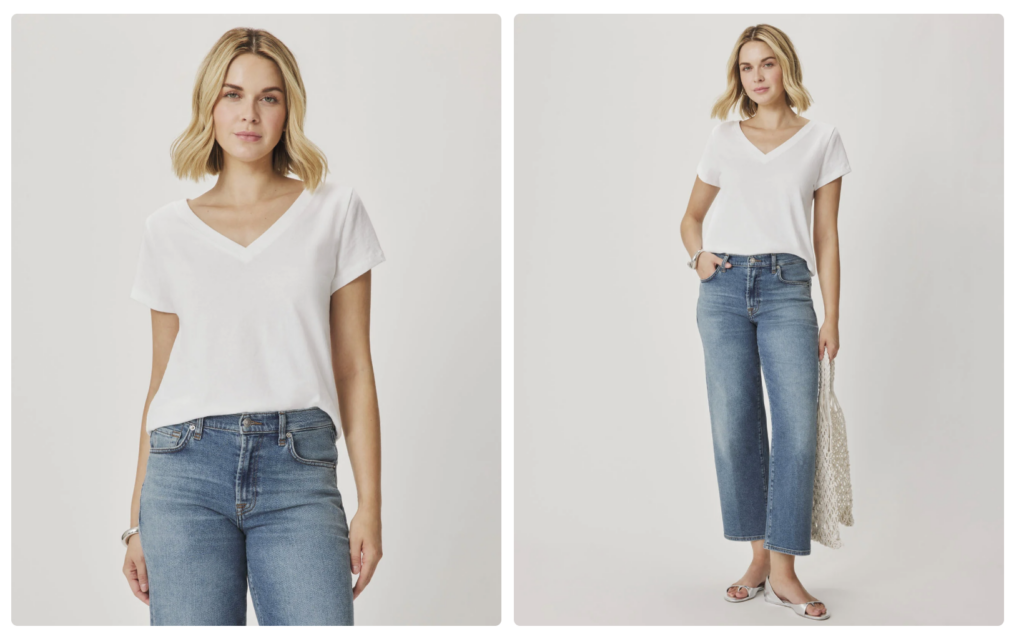
For many brands, it’s easy to have an interest in locally-grown, climate benefitting fibers. It’s actually taking the leap to move that material through the supply chain that is hard. At Fibershed, we developed the Climate Beneficial Verification program to help bridge that gap and support companies who want to make the move from extractive supply chains to ones rooted in building healthy soils and creating economically viable farms, But shifting away from conventionally-produced, low-cost textiles and moving toward regionally-produced, whole-ecosystem-supporting fibers takes more than good intentions on the part of interested brands. It takes time and patience, in addition to people committed to imagining—and then actualizing—a truly different supply chain.
This is the story of how the Los Angeles-based clothing company Splendid did exactly that.
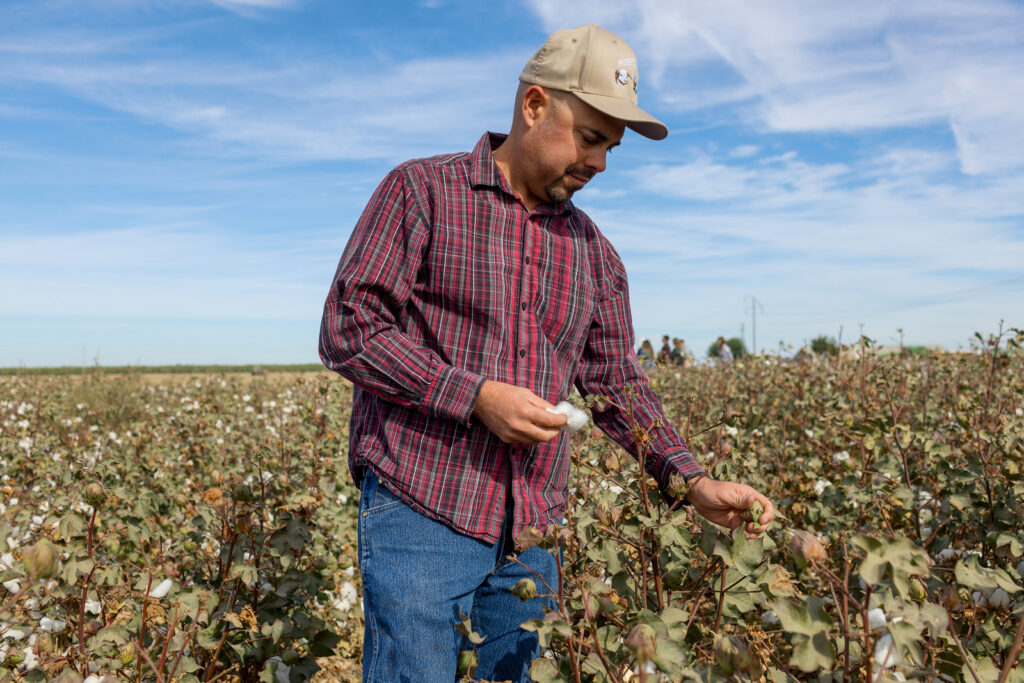
Things got started in 2024, with a visit to Gino Pedretti’s farm during one of our annual Climate Beneficial tours. Splendid’s design team met the Pedretti family, walked the fields, and saw firsthand what soil-building agriculture looks like in practice. That experience changed the conversation inside the company, and that single farm visit catalyzed a cross-department effort to rethink how their materials could be sourced. For the first time, Splendid committed to regenerative cotton and began building a domestic supply chain, the first step of which required purchasing U.S.-made fabric.
Turning that moment into a finished product, however, required persistence. Introducing a new fiber—especially one that costs more—touches nearly every part of an organization like Splendid. Fibershed’s team supported this effort in numerous ways. We worked alongside Splendid’s compliance team to add Climate Beneficial to, supported the development of accurate product claims (the verified language brands are allowed to use to describe environmental and sourcing practices), and helped ensure those claims met regulatory and industry standards. We also connected their product team with our supply chain partner, Laguna Fabrics.
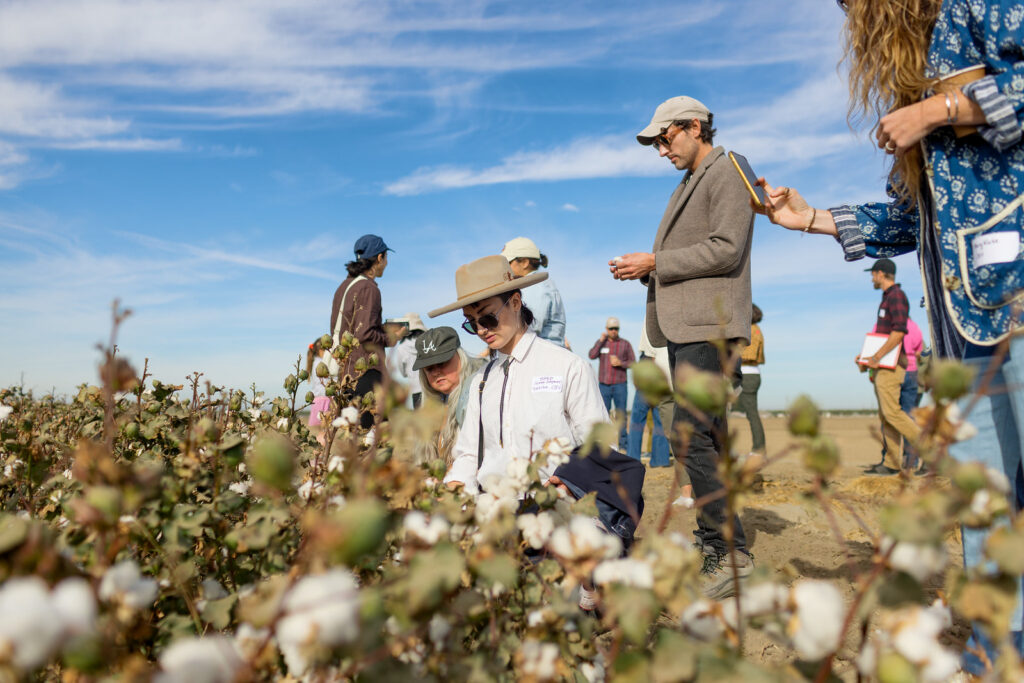
Throughout it all, Splendid’s Creative Director, Holly Shapiro, championed the effort internally, helping keep the project moving through inevitable hurdles. The lesson? When farmers, mills, and manufacturing partners stay connected, the inevitable challenges that arise from supply chain shifts can absolutely be solved.
“Visiting the Pedretti farms and learning directly from the experts behind this work has been truly inspiring and grounding,” Steff Zorner, VP of Marketing at Splendid, shared. “It reinforced how powerful deep, thoughtful collaboration across the supply chain can be—and why it matters for brands to show up, learn, and advocate internally for programs like this.”
Just one year later, in 2025, Splendid’s marketing team attended another tour at Bowles Farming Company—this time, with a product ready to go to market.

What makes Splendid’s journey remarkable is not that they expressed interest in better materials. Many brands do. It’s that they stayed with the work long enough to make those materials a real part of their product.
They didn’t settle for misleading or aspirational “green” language or even surface-level impact. They built relationships, secured documentation, and delivered products that reflect measurable environmental and economic outcomes. In doing so, they proved that climate-beneficial sourcing is entirely possible.
You can check out the finished products at their web store.