
Location: Fibershed Learning Center, Point Reyes Station California
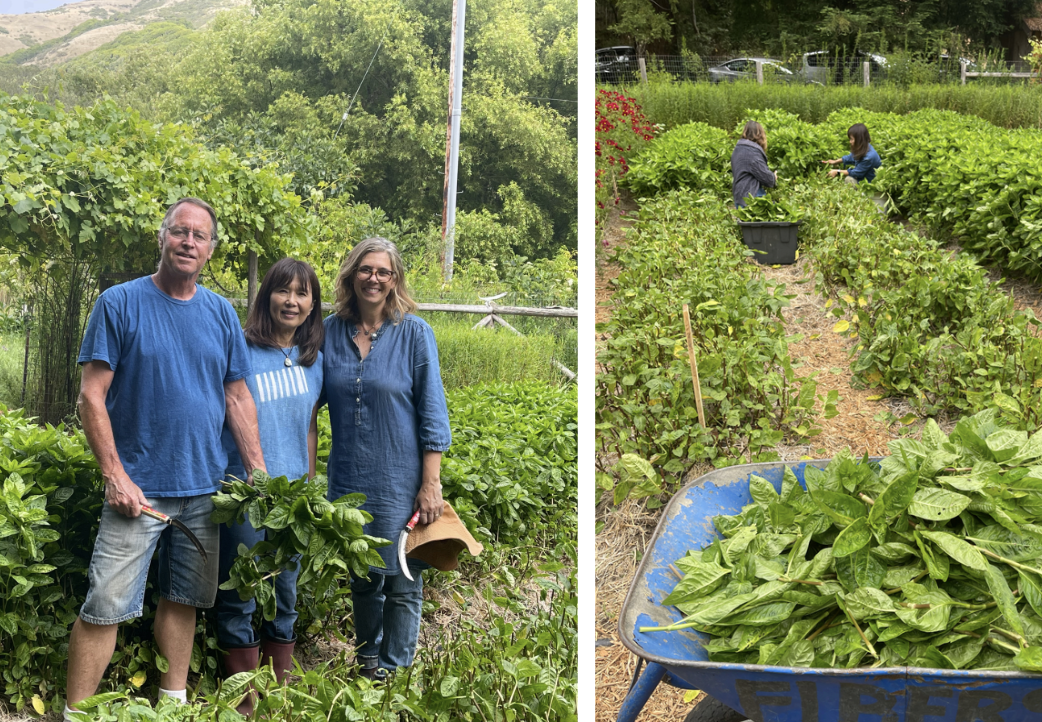
Three Northern California Fibershed members & producers, Craig Wilkinson, Rimiko Berreman & Heather Podoll, have collaborated with the Fibershed Learning Center (FSLC) in Point Reyes Station California to grow several varieties of Japanese indigo / Persicaria tinctoria from multiple seed sources.
One source included seed collected from the FSLC at the end of the 2024 season. Another seed source was from the Northern California Fibershed Producer Gynna Clemes and Seven Four Pigment Farm located in Pinole California. Seed was secured from Rowland Ricketts, a seasoned indigo farmer, artisan and educator located in Indiana. Rimiko Bertram provided three seed sources from Japanese farmers and researchers, which included three varieties, Senbon, Tsubakiba and Kojoko.
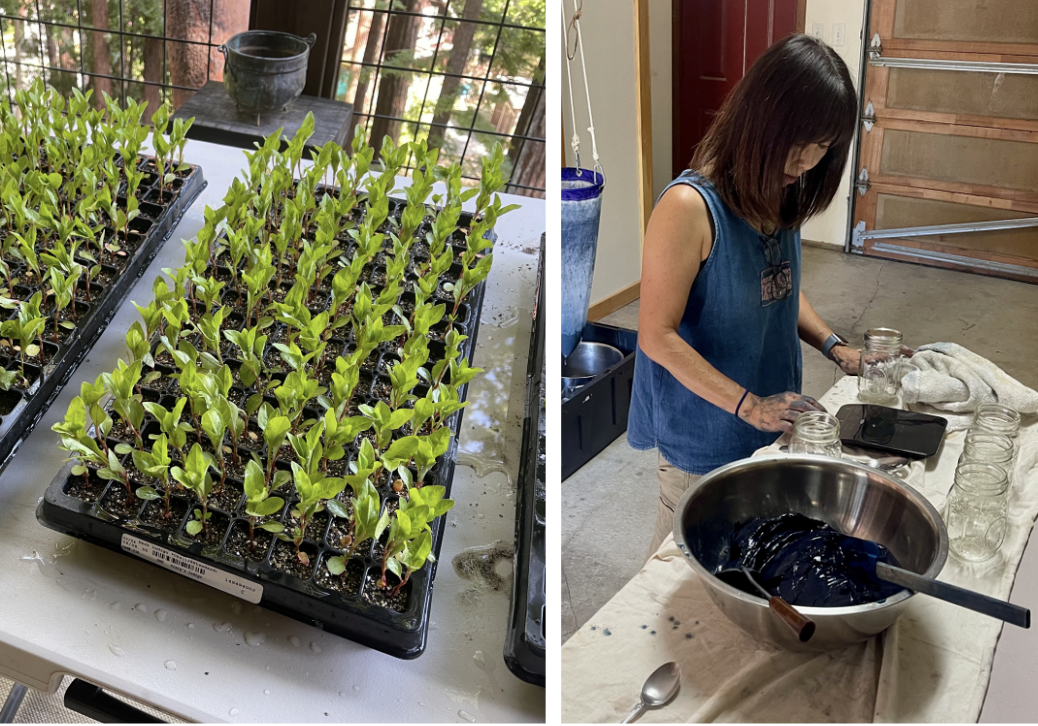
The seeds were propagated by Headstart Nursery in Gilroy, California. Fibershed has a successful relationship with Headstart Nursery propagating our indigo seeds for over 10 years.
Six seed sources were sent for ‘germination trails’ in planting trays with 128 cells, each resulting in different germination percentages. Overall good results provided data for comparison and enough seedlings to plant four forty feet long beds. Each bed included two rows of indigo seedlings planted on 10-12 inch spacing. The planting beds at the FSLC are exceptional and have consistently produced beautiful healthy plants and this year is another example of quality gardening and land management practices. The indigo is lush and clearly displays the botanical features of the different varieties.
2025 Timeline:
January/February – Secured indigo seed from six sources.
February/March – Coordinate seed germination trials with Headstart Nursery.
April/May – Transplant indigo seedlings at the FSLC
June/July – Cultivation = Remove weeds, transplant more seedlings to fill in for losses due to hungry ‘pests’ including gophers and others, troubleshoot irrigation.
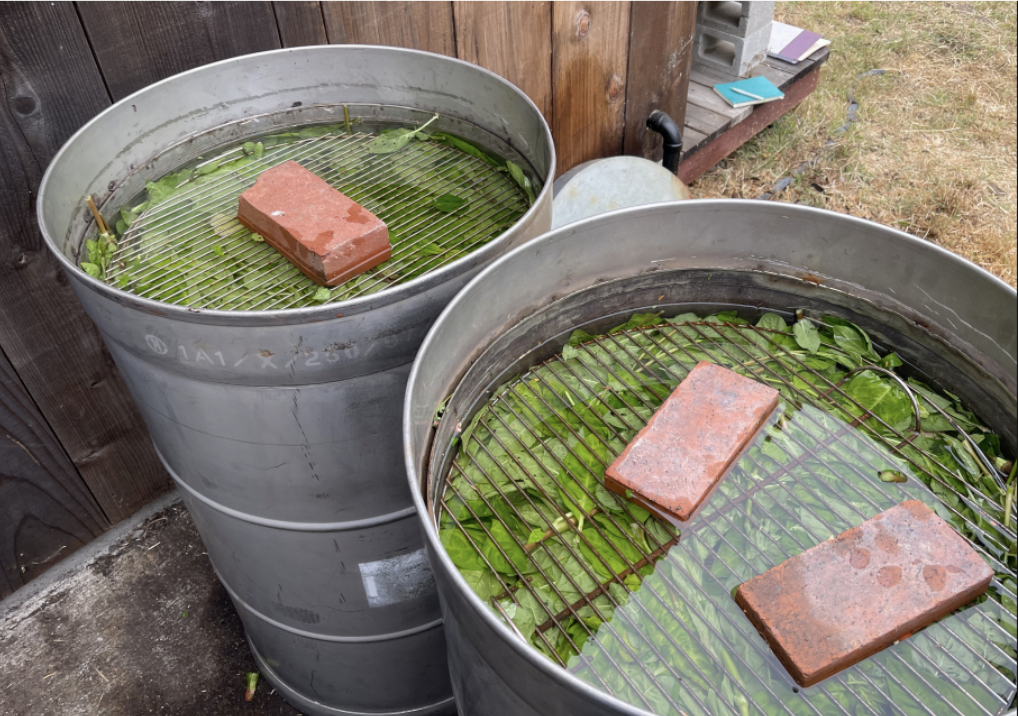
July 17th, 9-11am— FIRST HARVEST of 80 pounds of fresh leaves, enough to fill the two new 55 gallon stainless barrels for soaking using the water extraction method. The first harvest corresponded with a gathering of University professionals which allowed a quality educational experience viewing a beautiful healthy indigo crop, a seasonal first harvest and insightful details to the processing of freshly harvested indigo.
July 20-25th – Process the first harvest of leaves. Harvest a second portion of the garden filling another two barrels to soak and later process into indigo pigment. Transfer pigment into jars, weigh and label. Clean equipment, tools and processing area.
July 29th-August 4th – Harvest a special third 40 foot bed of the indigo variety Senbon from Japanese seed. Very healthy plants with a rounded leaf shape. Fill two barrels and soak. Process into pigment, transfer to jars and document the results.
A 40 foot bed was left without harvesting to allow early flower and seed production. The harvested beds will grow back to allow for another harvest and/or left to flower and seed. Fresh seed is needed each year for quality germination.
Our goals for this 2025 collaboration include:
- Continue our relationship with Headstart Nursery for seed germination trials and propagation services.
- Provide quality indigo seedlings for the FSLC 2025 season.
- Evaluate different indigo varieties from multiple seed sources.
- Cross-train Craig and Rimiko with Heather giving detailed instructions on the use of the FSLC indigo water extraction equipment and supplies.
- Harvest and process indigo using the water extraction method.
- Document weight of harvested leaves and final indigo pigment.
- Provide educational opportunities for the School Garden Network.
- Provide educational opportunities to FSLC guests as we plant, harvest and process indigo including creating indigo dye baths from our 2025 indigo crop.
- Harvest, process and store seed for the 2026 season.