

Words by Siri Thorson, Photographs by Paige Greene
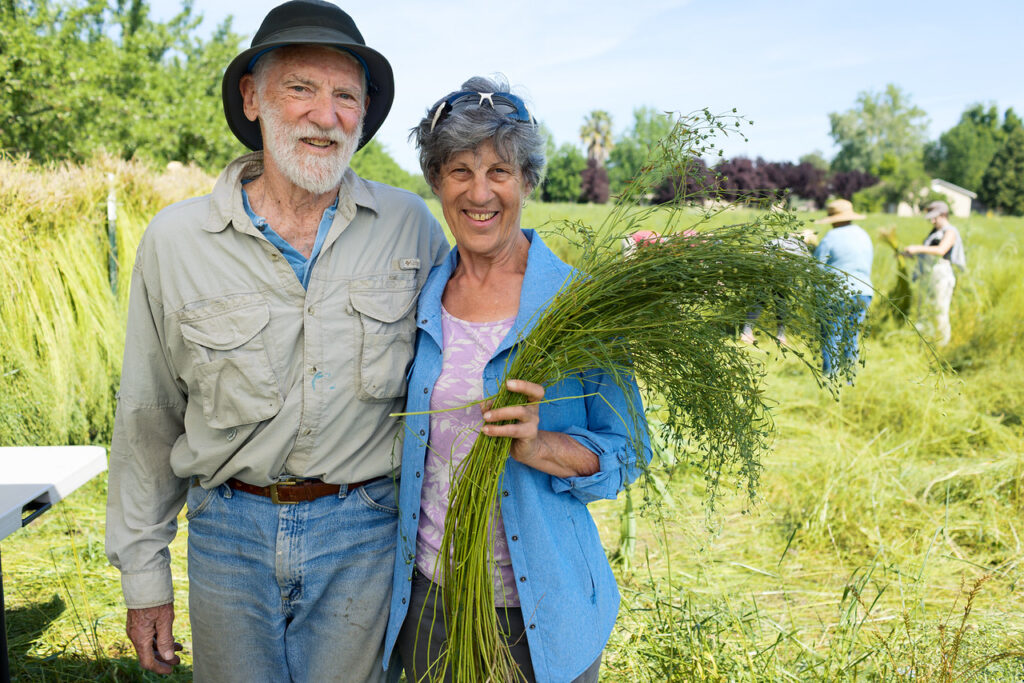
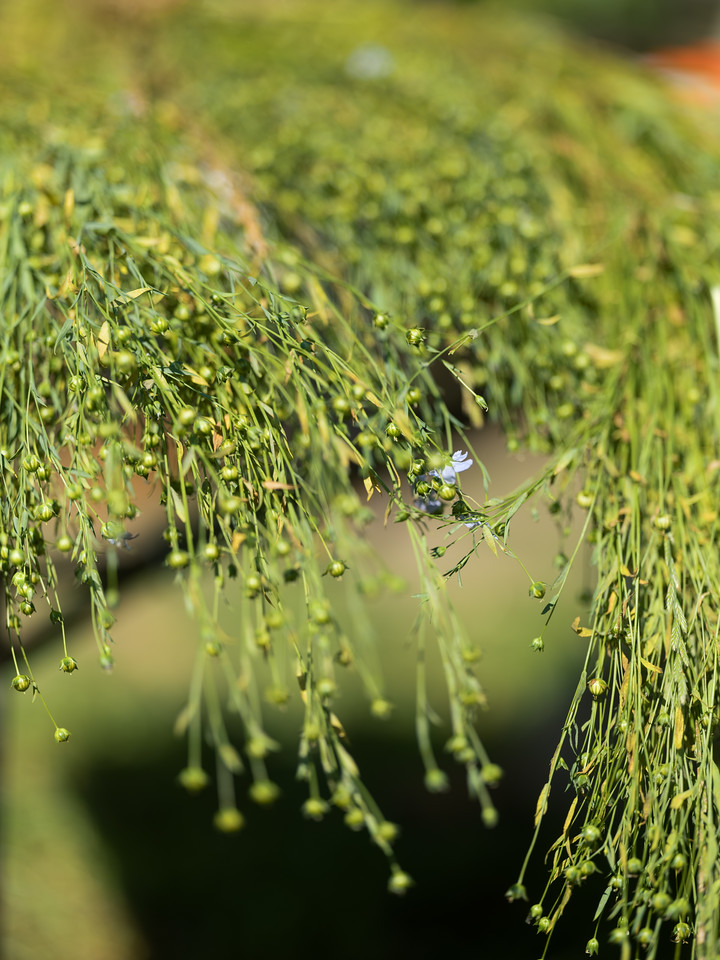
There’s a real magic to linen, and it only deepens over time. Softening with every wear, naturally antimicrobial, it’s a hardworking fabric that evokes something ancient, elegant, and timeless. Indeed, flax (the plant that produces not only linen fibers but flax seeds and linseed oil) has been grown for millennia, with early evidence of cultivation dating to around 5,000 BCE in ancient Mesopotamia. Its sweet sky-blue flowers are a common sight along the Western European coast from France through Belgium and the Netherlands, where 80% of the world’s flax fiber is grown today. Once a common crop in the US, especially in the 17th-century colonies, linen production sharply declined after 1800 as first cotton and then synthetic fibers became cheaper and easier to produce. One by one, domestic linen mills shut down, with production fading out entirely by the 1960s. As the only small-scale processor of flax in the United States, Sandy Fisher and Durl Van Alstyne of Golden State Linen are determined to see the once thriving American flax fiber industry brought back to life.
The story of Golden State Linen, formerly known as Chico Flax, began in the 1980s with Sandy’s blossoming passion for weaving textiles. While learning traditional techniques and finishing practices in Scotland, she discovered a particular fondness for linen. “As a weaver,” says Sandy, “I really like working with the fiber itself. I have a countermarch loom which was designed for it. I love how my loom responds.” Back home in California, she and a group of friends began to wonder if they couldn’t produce their own fibers in a
socially responsible and environmentally friendly way. Things came to a head in 2012 when a factory fire in Bangladesh killed 117 people and injured hundreds more. “There was a whole group of us in Chico that really wanted local, responsibly sourced materials. We also wanted something that would respond to our hot environment as far as coolness of wear. We just had this idea, let’s grow linen! Not knowing if we could or not.” After some early hiccups, Sandy and Durl discovered the key: planted in early fall
and overwintered to avoid scorching summer heat, flax thrives in their Northern California climate. This technique, combined with regenerative agricultural practices and a healthy dose of patience, produced benefits for both their harvest and the land itself.
They noticed the return of earthworms, birds, and native insects thanks to cover cropping, aeration, mycelium-rich compost, and the addition of a native hedgerow. The flax itself was flourishing too, with some plants topping five feet, well above the 36 to 40 inch average. They found a mill that was able to produce yarn for them as a beautiful wool/linen blend, and they even discovered uses for their byproducts, as filler for organic hypoallergenic mattresses, paper-making materials, and straw mulch. Growth,
however, rarely travels in a straight line.
Near planting time last year, Sandy and Durl received potentially devastating news: they had two weeks to pack up and move. “A couple of our board members and some other helping hands had Labor Day Weekend off and they pitched in to help us.” A friend lent them space in a garage for storage. It wasn’t ideal, but they managed. Shortly thereafter, a stroke of luck: they caught wind of someone who had two acres of land in nearby Durham that wasn’t in use and was ready to plant. “And everything since then has been serendipitous. All sorts of good things have come our way,” says Durl. “Next
week, we’re going to start harvesting two acres of some of the most beautiful flax that we’ve ever grown.” The move, while stressful, also had some clarifying benefits. “The other thing that it did for us is that we realized, as much as we liked having the farm and tending and healing that soil, which was a great story itself, it felt kind of scattered. Now we can actually just work on our processing, and focus on improving our break. And we can develop more automation on the other parts, like the scutching and the hackling.”
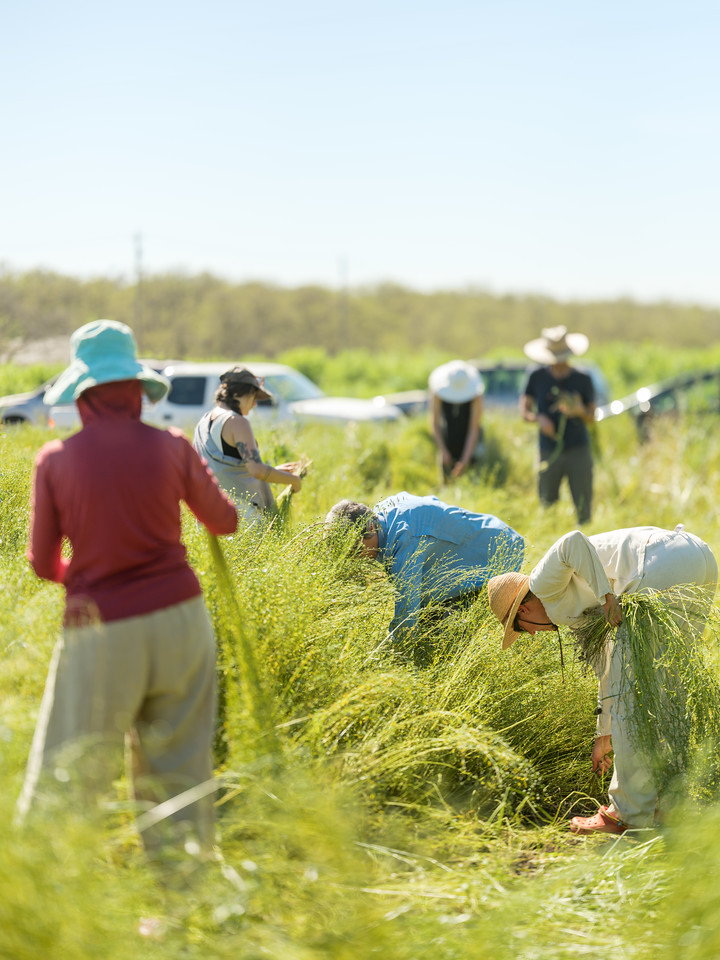
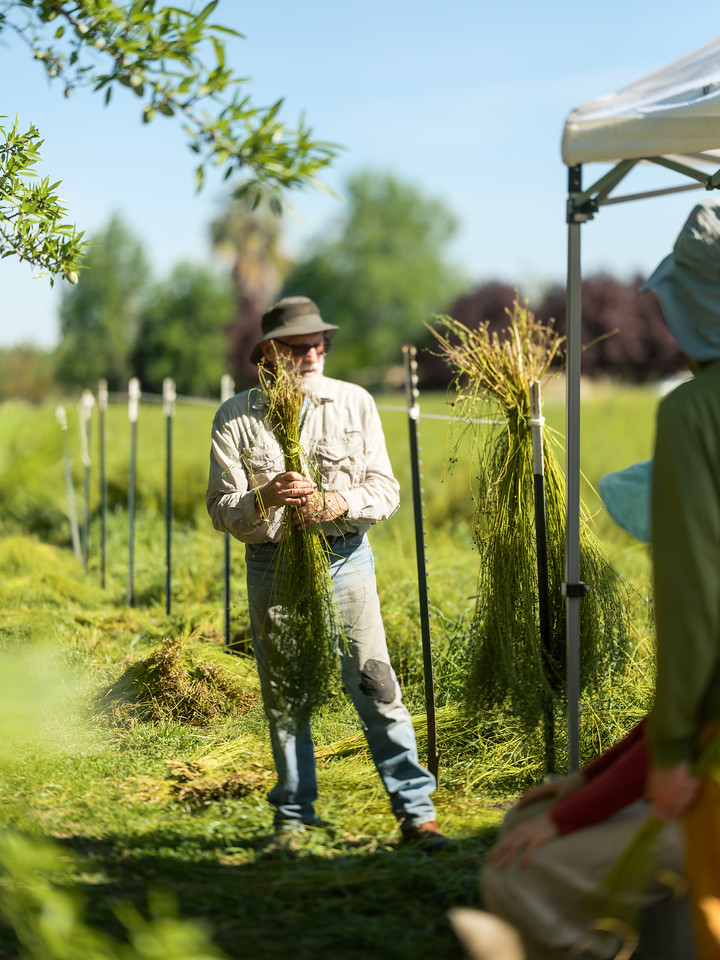
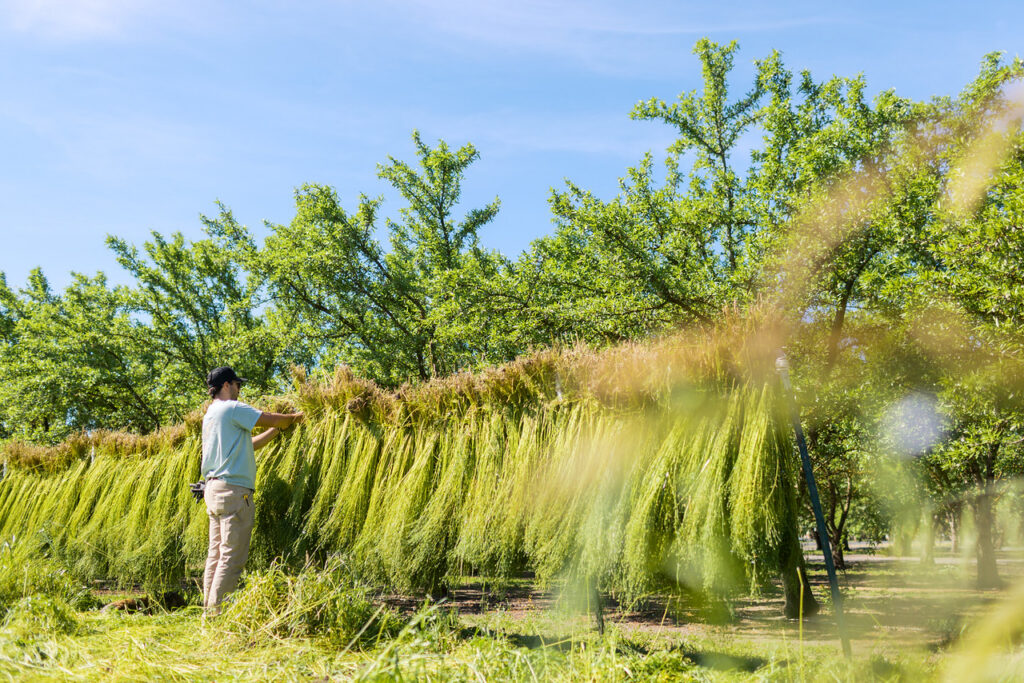
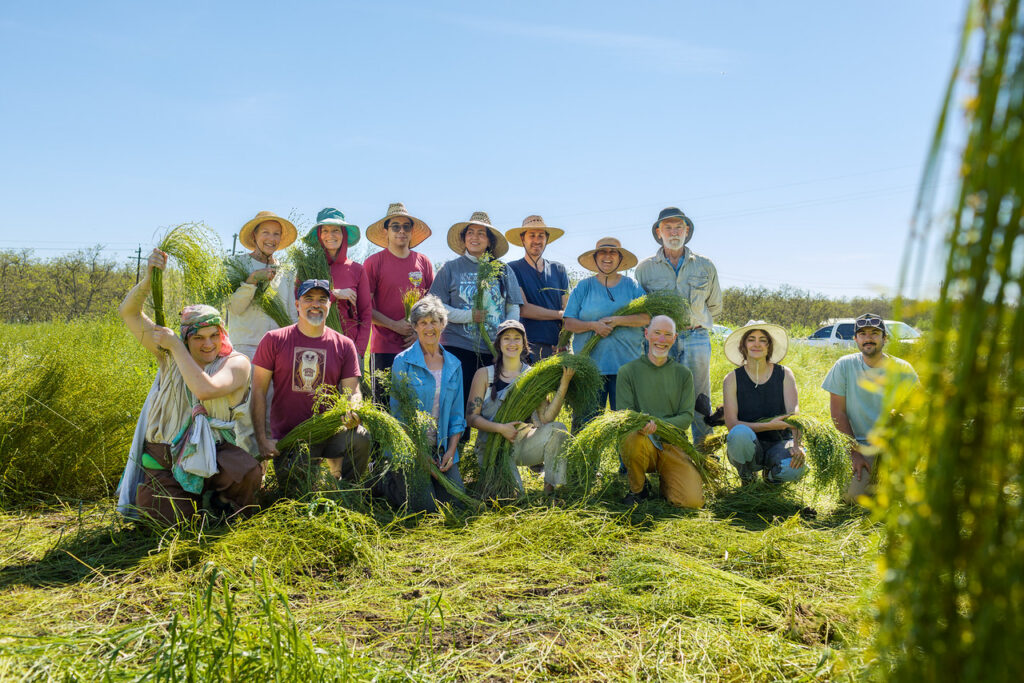
This spring’s harvest party drew both experienced hands and newcomers from many walks of life. Despite hot and windy conditions, volunteers showed up and stayed for hours helping to bring in the flax by hand. “It’s part of a tradition, and it’s a good time,” says Sandy. “Even when I do get my dream harvester, I’ll still have the pulling parties.” This sense of community plays a big part in attracting more growers to the idea of planting flax for fiber, bringing the goal of year-round Californian cultivation ever closer. The effort has not gone unnoticed: Golden State Linen has just been awarded a
$10,000 UC SAREP grant titled “Regenerative Fiber Flax Production and Processing in Northern California: Education and Outreach to Build Opportunities for Local Growers.”
This will help enable them to expand operations outside of Chico, with farmers now sowing their flax in Arcata, Petaluma, and Pescadero.
Their continued collaboration with Chico State University has also yielded some exciting results. Engineering students have helped design ways to automate processing, and recently the Center for Regenerative Agriculture and Resilient Systems has been experimenting with planting flax between rows of vegetables like chard and even orchard trees. So far the results are promising, showing that this intercropping helps the soil retain moisture. Right now though, the top priority is getting settled into their new
warehouse by the Chico airport, a space that will house their processing operations.
They also have plans to fundraise for a new harvester, the kind of machine that would allow them to scale up efficiently. The ultimate dream? A linen mill, or two, in America. Though it may not happen in their lifetimes, Sandy and Durl are devoted to paving the way for the return of a full-scale, profitable, American-made flax-to-linen industry. Says Sandy, “I’d like to at least be able to say that I made some contribution to that.”