

Words by Ren Lezeu, Photos by Noelle Gaberman
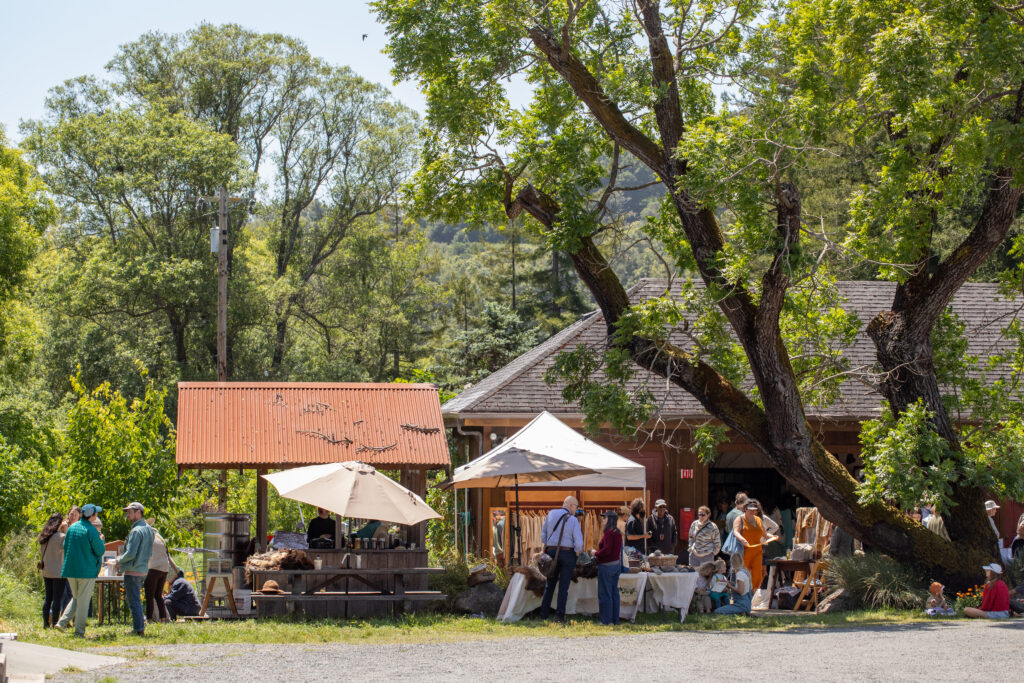
Eager gardeners, dyers, and fiber enthusiasts made their way to the Fibershed Learning Center in Point Reyes Station at the beginning of May to enjoy a day of community, learning, and textile-oriented demonstrations at this year’s Fibershed Spring Market. Built on a network of affiliate producers, the market brought together different elements of the local textile production chain into one place, effectively creating a holistic display of possibilities for individuals looking to try their own hand at one or more of the steps involved in creating a piece of textile work. Visitors to the market got to learn and shop on the gorgeous grounds of the Learning Center amidst lush stands of horsetail and impressive stalks of foxglove.
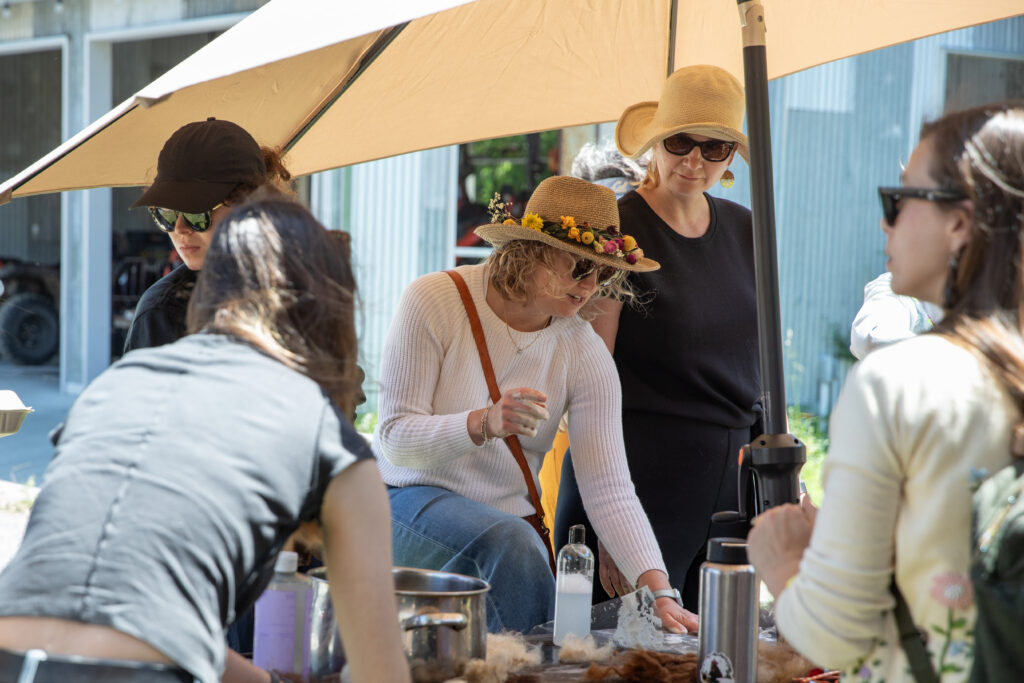
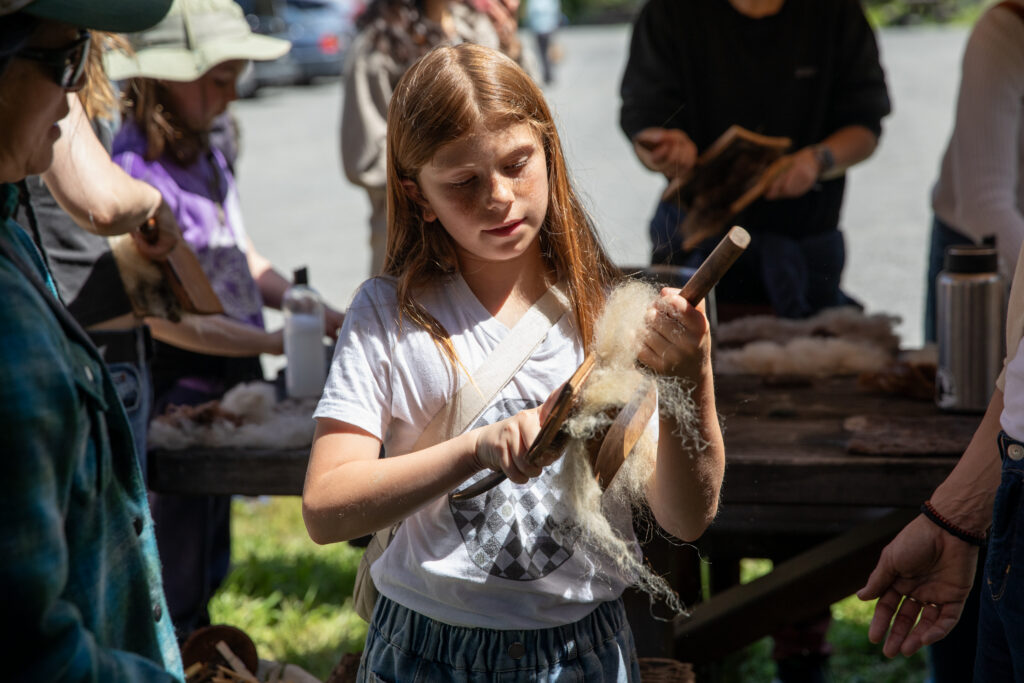
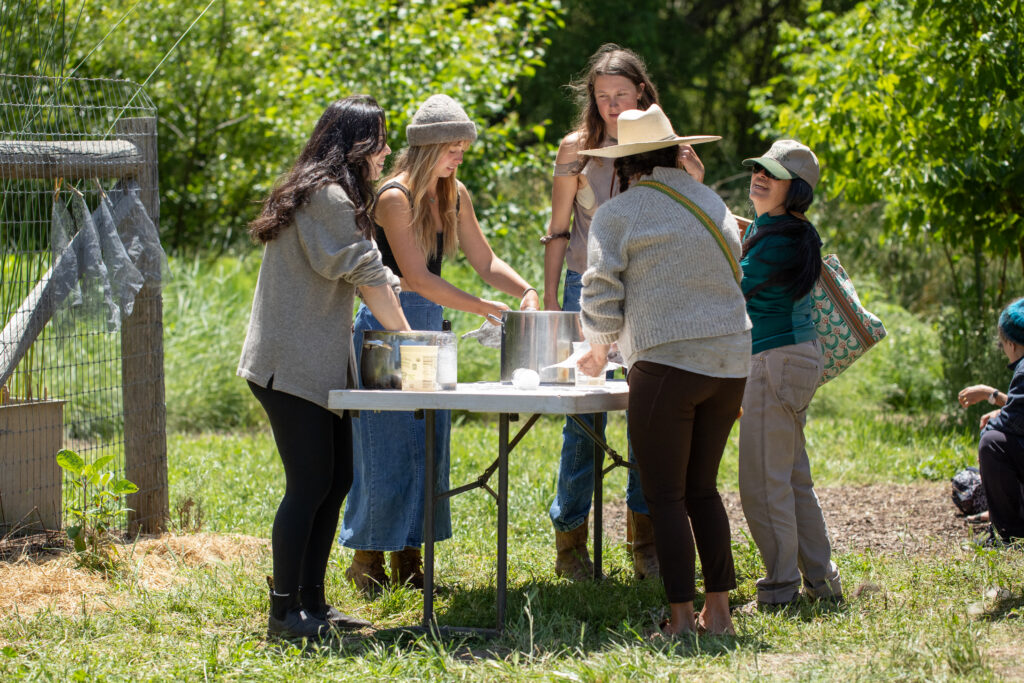
The day was structured around demonstrations that included wet felting, silk dyeing, and eco printing, which allowed guests to get hands-on experience in textile work. The wet felting demonstration, which was run by Bodega Pastures, encouraged participants of all ages to learn the fundamentals of turning unprocessed wool into felt. Participants could be seen throughout the day applying friction to wet, soapy wool in earnest, gradually meshing the fibers together until they had a finished piece of felt that held itself together. For many, this was the first time they had engaged with wool in this way, and the smiles and laughter coming from the picnic tables where the activity took place spoke to their enjoyment of the technique.
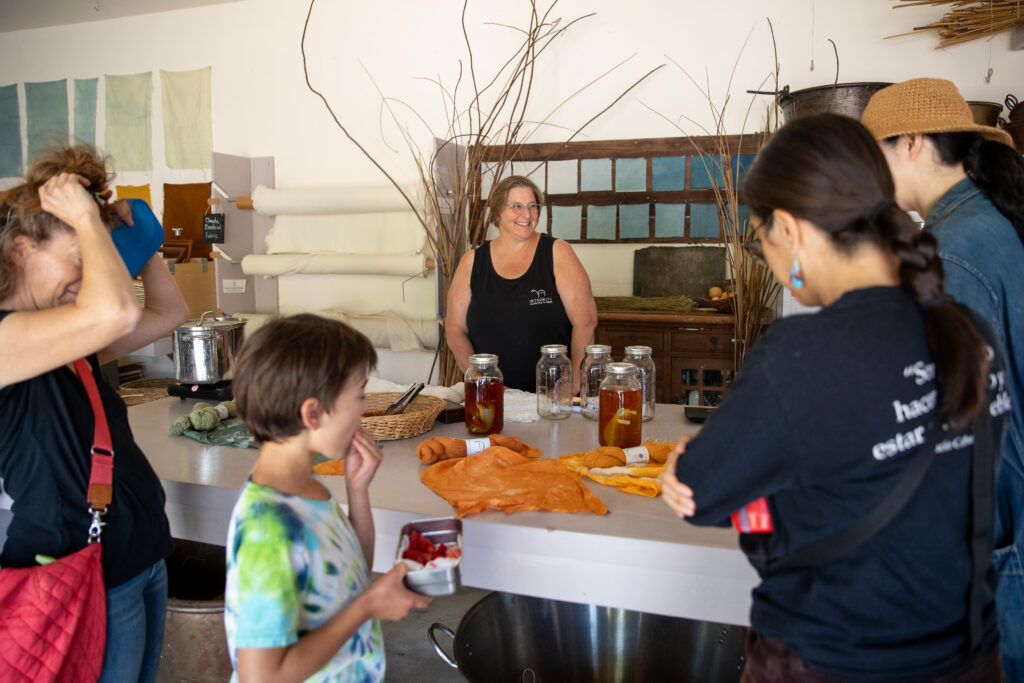
The second workshop of the day was a demonstration led by Charlene Schmid of Integrity Alpacas & Fiber in dyeing fabric with plants. For this activity, participants watched as hot water pulled the natural pigments out of three different plants to create a green, yellow, and orange dye, before they were invited to try dipping silk handkerchiefs in to dye them. After the silk had soaked for a while and the dye had time to adhere, participants walked about in the sunshine airing out their handkerchiefs so they could see the final outcome. Lovely dyed silks could be spotted tied to bags, hats, and wrists by the proud participants afterwards, adding to the cheery spring ambience.
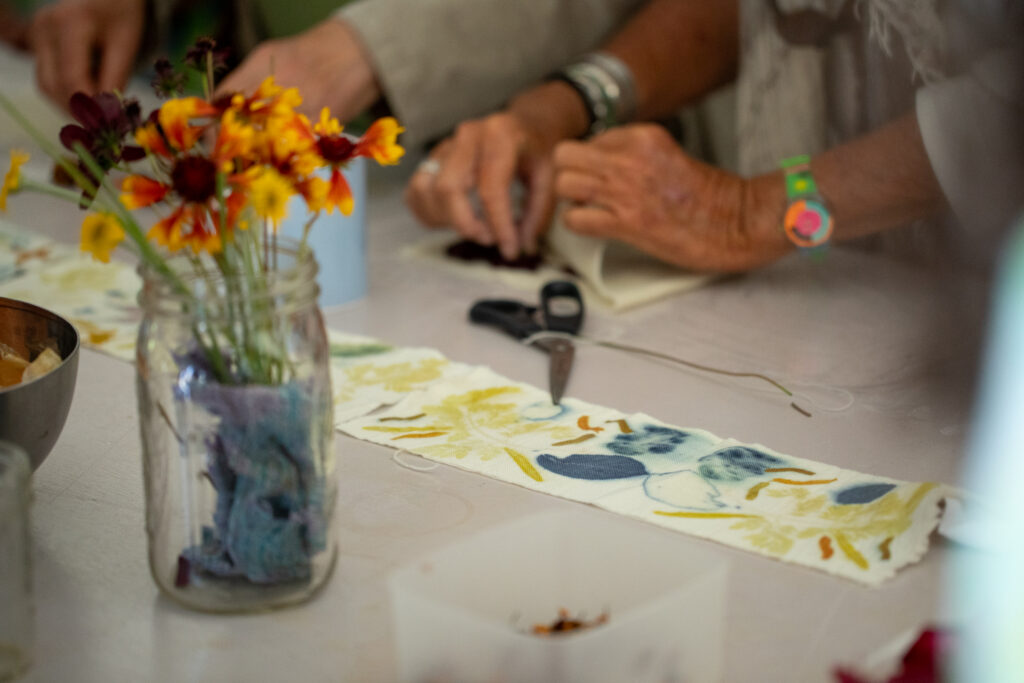
Eco printing occupied the final workshop slot of the day. In this workshop, Clara Pitt with Kassenhoff Growers demonstrated how to transfer the pigment from flowers and leaves, provided by Kassenhoff Growers, onto wool fabric. Armed with Mexican bush daisy, purple plum leaves, orange cosmos, and other specimens, participants artfully placed the plant matter onto a piece of wool fabric before rolling it tightly around a copper pipe with plastic wrap. Placed in a steamer where the pigment would be encouraged to leach into the fabric, it was an exciting surprise for each participant to unroll their piece of fabric and uncover the colorful design they had created. The gasps of wonder and exclamations of delight at what they revealed could be heard with each fresh batch of fabric coming out of the steamer. No two pieces were the same, thanks to each participant’s personal creative choices, which made for a wonderful talking point as they compared the outcomes of their experiment with those of their peers.
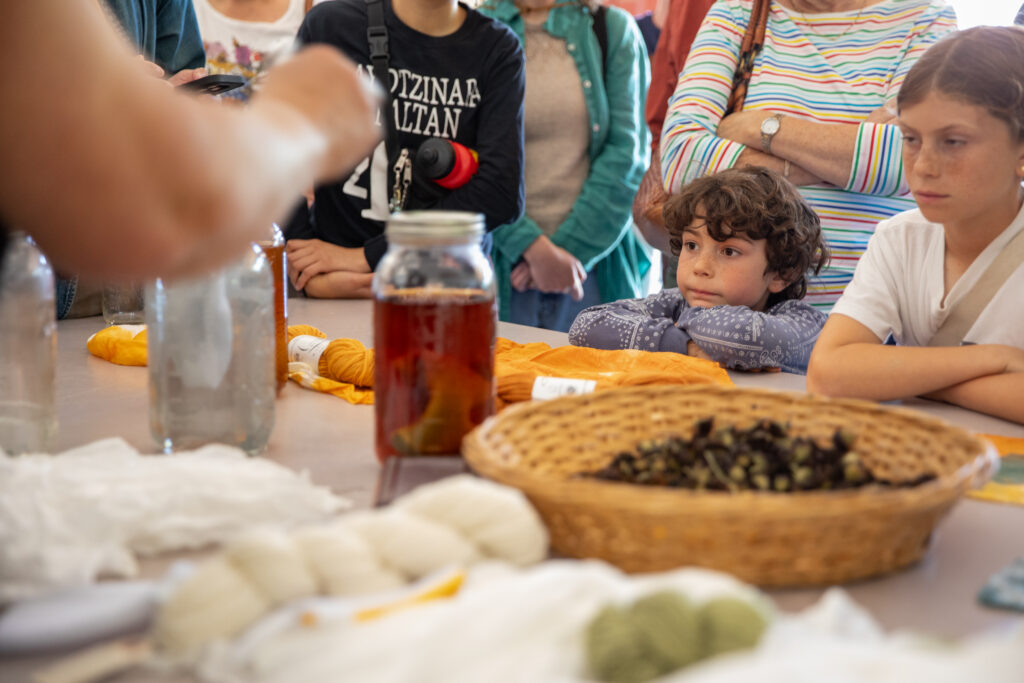
In addition to the demonstrations, visitors could stroll the grounds and do some shopping for regional, sustainable fiber and dye plants. Starting from the ground up, Charlene Schmid of Integrity Alpacas & Fiber had her wool pellets — and luxurious alpaca yarn — available for those looking to improve their soil health without the use of commercial fertilizers, and Helen Krayenhoff of Kassenhoff Growers offered a wide range of dye plants for the home grower to build up their dye garden. With plants ranging across most of the color spectrum, there was a plant to suit everyone’s particular color preferences. For two of the most iconic dye plants, Peggy Agnew of Red Creek Farm had madder and indigo plants available, along with a wide range of her sheep’s wool and yarn dyed with plants from her own garden that showcased the color possibilities of a wide array of dye plants.
For the non-gardeners, there was wool to buy from Coleen Maloney of 5 Creek Farm and Marcail McWilliams of Valley Oak Wool & Fiber Mill among others, and for those who didn’t feel inclined to make items from scratch, there was an offering of beautiful clothing and home textiles to choose from as well. Elaine Hamblin of Kosa Arts brought forth her offerings of slow fashion apparel, much of it eco printed and made with Sally Fox’s organic cotton fabric. Just across from her was Lisa Wilde of Wilde Works with her wide display of woven, felted, dyed, and eco printed textiles for body and home, each piece demonstrating the one-of-a-kind nature of working with the eco printing process. Once visitors had built up an appetite after learning and shopping all morning, they could opt for delicious onigiri or donburi from Yuko Kineko’s stand, Kinoko.
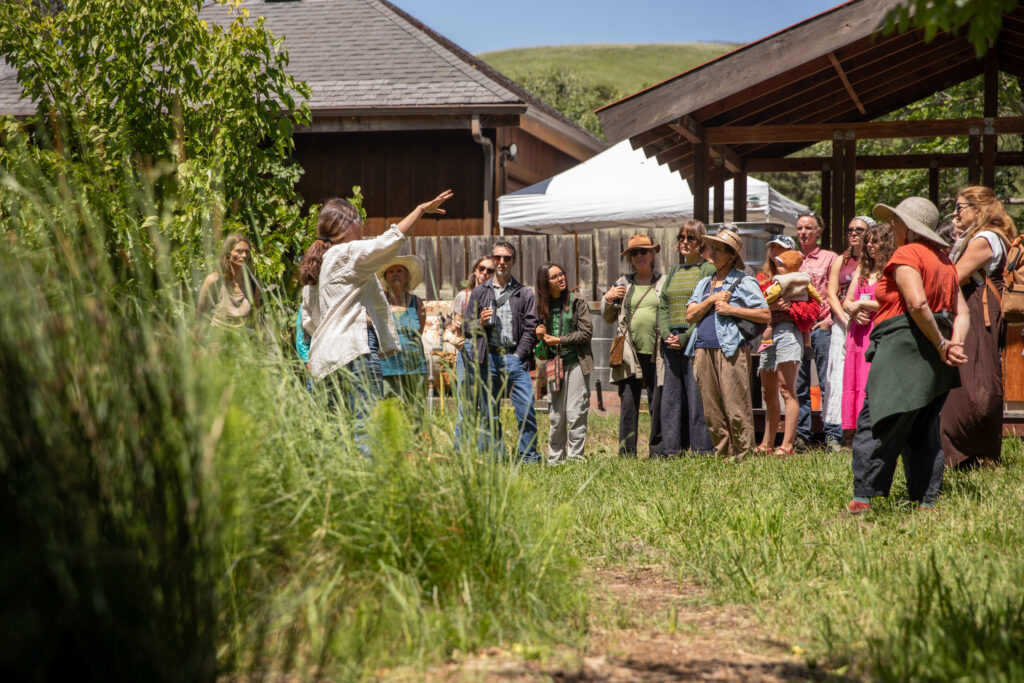
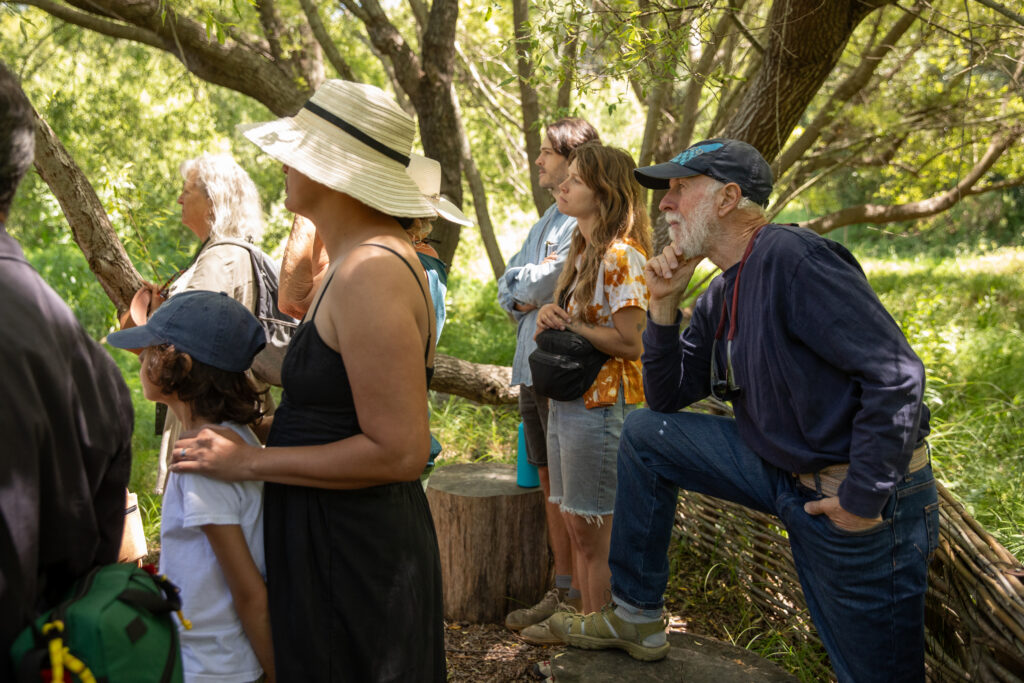
In combining the varied offerings of the affiliate producers with the three hands-on learning opportunities, the Spring Market succeeded in creating an engaging day of community-centered education. Seeing participants of the workshops cheerfully displaying their felted, dyed, and eco printed creations all while continuing the conversation with the producers who had experience in those areas of textile and agricultural work intertwined into a greater sense of purpose and community. Fibershed has always been about regional textile systems, but education and community are what it fosters in order to make those systems happen, and the Spring Market was a wonderful way to bring community members into the natural textile conversation.