

Woven Together: Wild Spaces, Working Landscapes, and What We Wear
June 11, 2020, 5:00 – 6:30 pm
Join us for Woven Together, a virtual panel discussion and Fibershed Marketplace pop-up, to discuss unraveling the interconnectedness of our second skin and land-based systems.
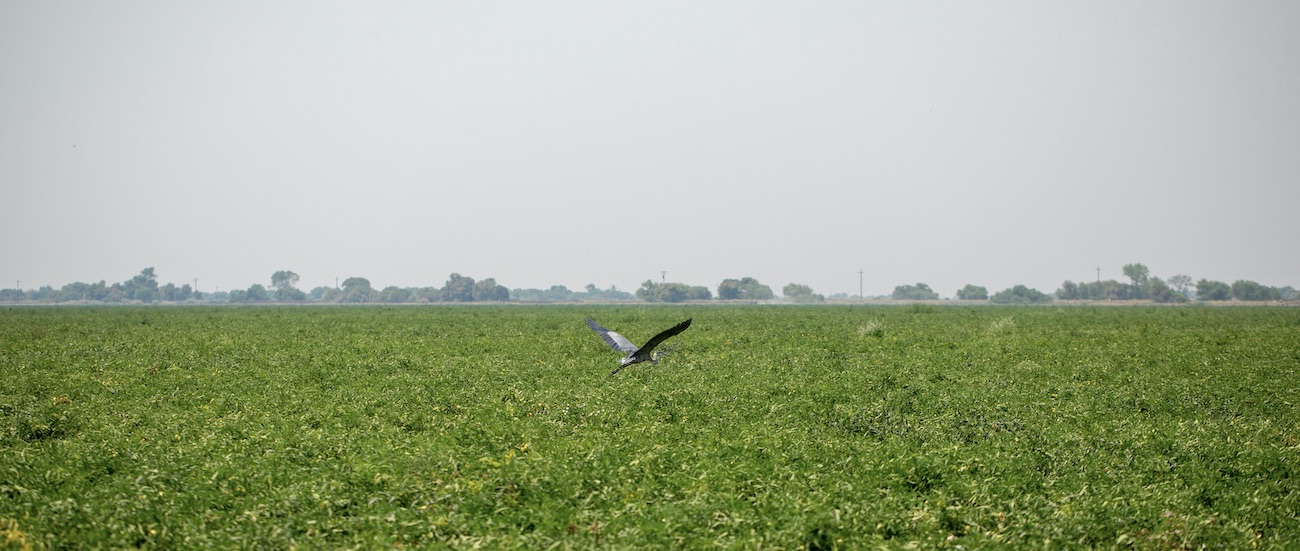
Across fibersheds, the landscapes that provide fiber — including cotton, wool, and flax — are intricately connected to “wild spaces,” from protected wetlands to migratory flyways to pollinator habitat and hydrological recharge. Fibershed is honored to host Woven Together: Wild Spaces, Working Landscapes, and What We Wear as a virtual event and part of the David Brower Center 2020 Community Program Partnership, acknowledging that the “working landscape and wildland interface” is itself a Western paradigm.
Clothing and textile systems, from production to consumption, have underwritten planetary degeneration, from the carbon emissions of the global fashion industry to the microplastic pollution that results from washing plastic textiles, which now dominate the marketplace and drive ever-cheaper consumer goods. Natural fiber systems offer emerging examples of how we can meet our essential needs for clothing and durable goods while restoring and regenerating ecological health and function.
Moderated by Rebecca Burgess, Executive Director of Fibershed, we will explore the paradigms of degradation and practicalities of regeneration: this will be a lively conversation amongst researchers, writers, and community leaders who work at the forefront of restoring the right relationship with our material culture.
Guest Speakers
Kat Anderson, Ph.D
Kat has a Ph.D. in Wildland Resource Science from UC Berkeley and is the author of the book Tending the Wild: Native American Knowledge and the Management of California’s Natural Resources. The book was recently chosen by the celebrated permaculture designer Ben Falk, as one of the most important books to read in order to permanently solve food security. Kat has worked with Native Americans for over 25 years, learning how indigenous people judiciously gather and steward native plants and ecosystems in the wild. Her interests are to learn, celebrate, and restore the similar plant uses, gathering and tending practices, and ethical stances towards nature that are in multiple local cultures here and around the world.
Nick L. Tipon
Nick is a member and elder of the Federated Indians of Graton Rancheria. A retired high school teacher, he has served as Chair of the Tribal Education Committee and the Sacred Sites Protection Committee of Graton Rancheria. He was a Board member of the California Mission Foundation. He is currently a Board member of the Historical Society of Santa Rosa, Fibershed, and is a consultant for the National Smithsonian Museum of Natural History, the Richmond History Museum and the Field Museum of History in Chicago, Illinois. He is an active faculty member of the STRAW (Students Teachers Restoring A Watershed).
Among Nick’s current interests is investigating the effects of the colonialism during the “contact period” on his ancestors, by the Russians, English, and Spanish. He is investigating the impacts of climate change on sacred Tribal resources and lands from a cultural perspective and TEK (Traditional Environmental Knowledge) perspective. He was recently a presenter at the California Adaption Forum on these topics.
Stephany Wilkes
Stephany Wilkes is a writer, researcher, business strategist, and UC- certified sheep shearer and ASI-certified wool classer. She practices all of these skills throughout the Northern California Fibershed and beyond. Stephany cultivates a dye garden, knits, spins, and offers fiber classes and workshops at yarn shops, festivals, and schools, to help people learn more about where their clothes come from. Her first book, Raw Material: Working Wool in the West, was published by Oregon State University Press in October 2018.
Fashion as a sector is experiencing a reckoning in the face of the Coronavirus pandemic, which is highlighting how there’s simply not enough connective tissue between the brand culture and the making culture to execute meaningful change, from fair wages to responsible sourcing. Using ecology as our lens, COVID-19 provides us the opportunity to determine what aspects of our cultural and economic lives are resilient and necessary for carrying into the future.
Throughout Woven Together, we will examine models of resilience and change in our relationships with wild spaces, working landscapes, and what we wear.