

Written by Veronica Kassatly In my last post for Fibershed, we talked about fashion’s purported commitment to the UN SDGs; about how those are underpinned by the Brundtland report’s definition of sustainability; and about how and why ‘sustainable’ fashion is not actually sustainable at all. The role that different fibers play in offering those who […]
Read MoreRecent Stories from Fibershed

Bread and Sweaters: How Grain and Grazing Benefits Food and Fiber Systems
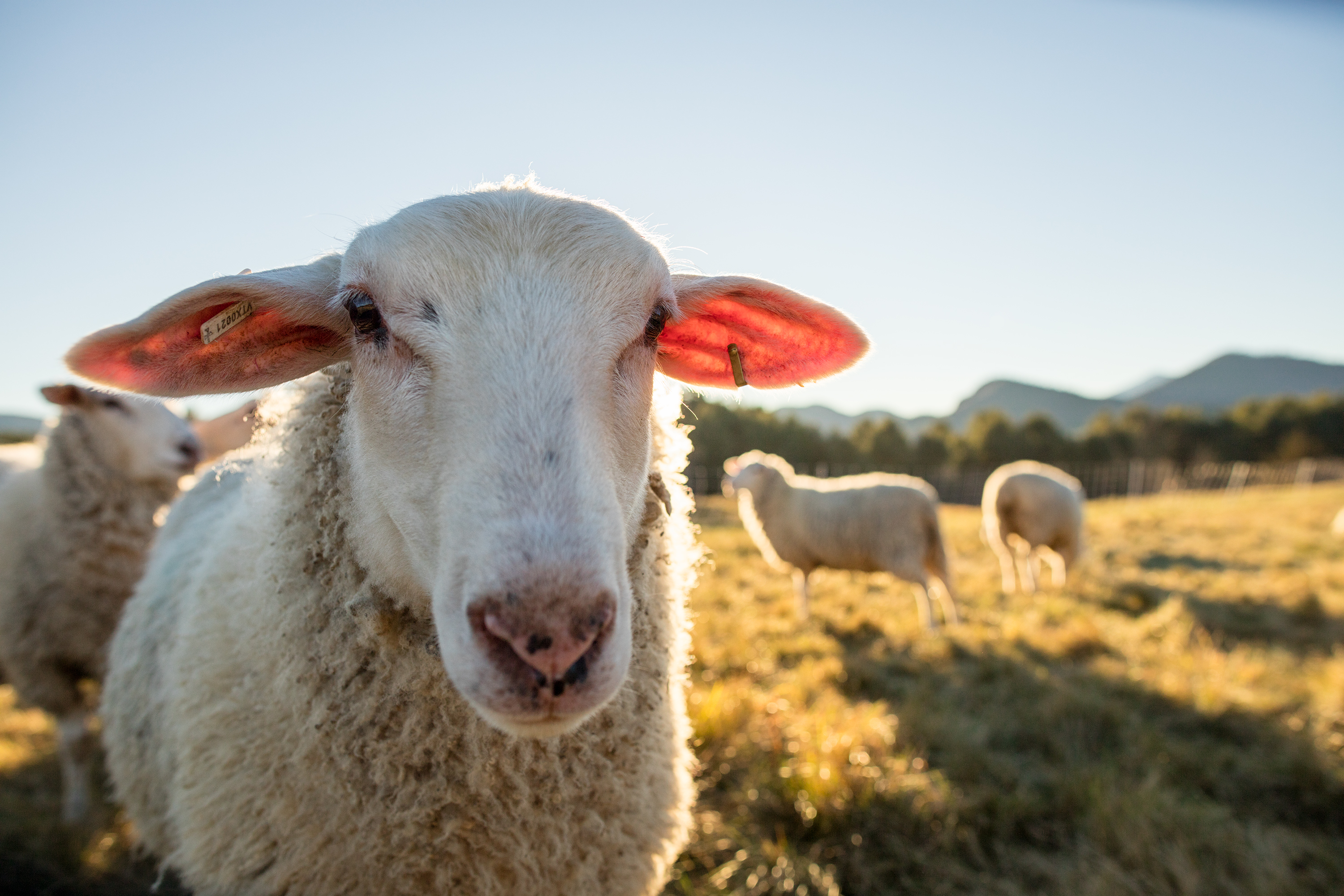
Written by Marie Hoff Paige Green Photography Grazing and grain are ancient, connected in a relationship of survival that, through their mutual adaptation, support the varied and complex world that is life itself on this planet. Forged on grasslands and woodlands, and over millions of years, grasses — which produce grain — and livestock — […]
Read More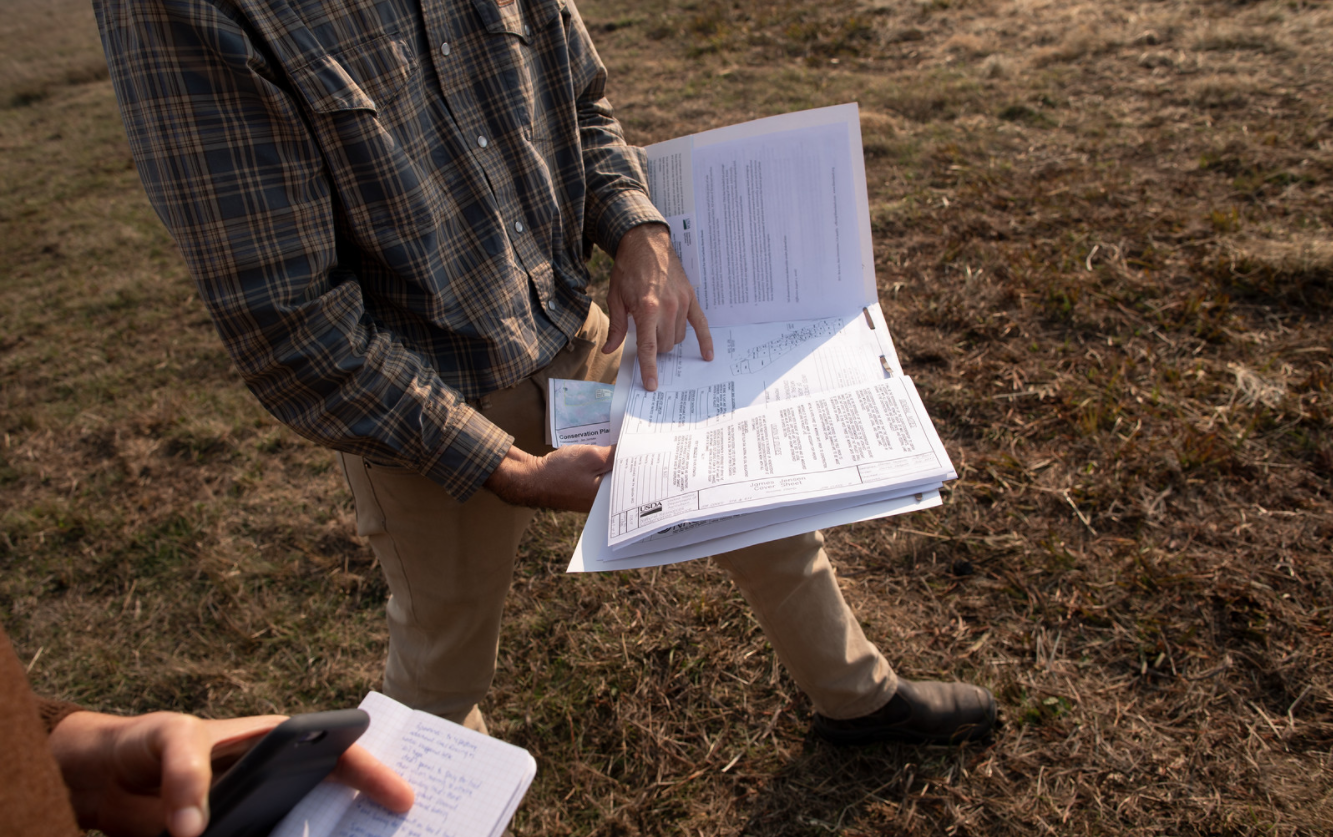
Regional Fibershed Communities Adapt to Global Climate Change
What rapidly changing weather conditions mean for our regional fibersheds and how innovative farmers and ranchers are stepping up to the challenges. The largest scientific expedition in Arctic history took place last year and included 300 scientists from 20 countries. The team spent 400 days taking ice, ocean, and air samples. Lead scientist Markus Rex […]
Read More
Degrowth: An Economic Framework that Values Ecosystem Capacity, Human Dignity, and Self Sufficiency
The mainstream fashion industry’s supply chains are not linear but operate in an economy with a take, make, and waste production model. This model takes mass amounts of raw materials and releases carbon emissions into the atmosphere; uses exploited labor to make these materials into products; then those products are wasted and “thrown away,” usually to a landfill in a low-income community of color. The driving force for this production model is to create infinite amounts of profit by producing as many things as possible for as cheaply as possible. This necessitates destroying the earth and simultaneously exploiting low-wage workers, who are mostly women of color. This belief in endlessly growing the economy is one of the main reasons why the fashion industry has to be completely transformed. Luckily, alternatives exist and are being built at this very moment.
Read More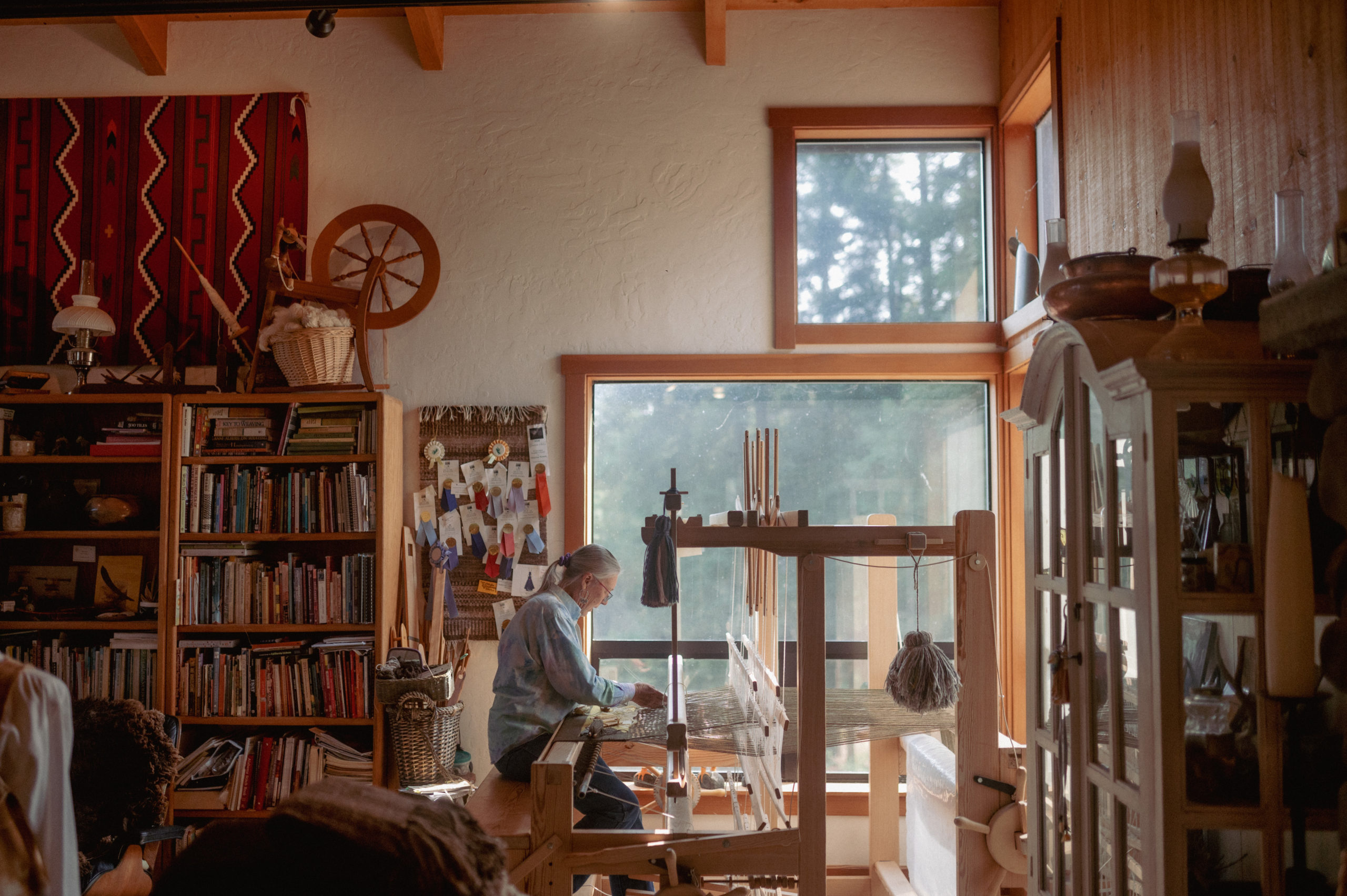
Intuitive Weaving at Henderson Studios
Written and Photographed by Koa Kalish Jennie Henderson is a prolific textile artist on the wild northern coast of California. Nestled in the small town of Point Arena, is Jennie’s home studio that she and her husband designed specifically for her weaving: with good light and room for all her many looms and tools. “I […]
Read More
Our Statement on the COP26 Volunteer Uniforms
World leaders have been meeting over the past week at the U.N. Climate Change Conference— COP26—to discuss the need for meaningful action to address the climate crisis. Core to Fibershed’s mission is talking about the climate impact of clothing and the need to build regenerative fiber and textile systems. That’s why we want to talk […]
Read More
A Small Footprint on the Earth, A Big Impression on Farmers: How These 8 Farms Are Raising Alpacas Sustainably
The benefits of raising alpaca go beyond their provision of fiber. Alpacas are naturally gentle creatures, generating a minimal environmental footprint that enables alpaca farmers to integrate the herd into ecological restoration plans. Along the way, alpaca farmers also find meaningful connections with the animals, the land, and a close-knit community of avid alpaca lovers. […]
Read More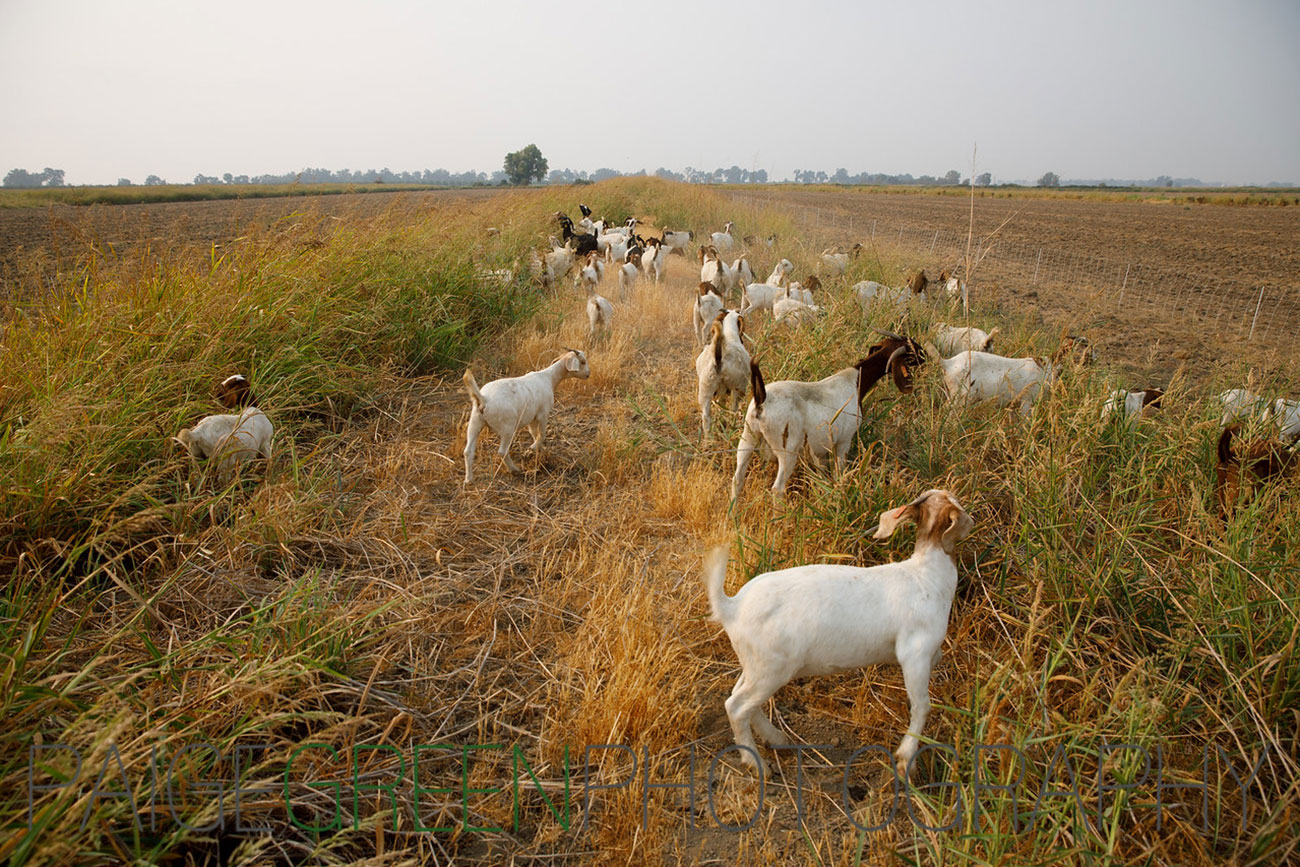
Climate Change and Agriculture: How Food and Fiber Work Together for Climate
Sustainable food production needs to include fiber systems in order to reduce agriculture’s carbon footprint and heal our planet. In this article, we discuss the link between climate change, agriculture, and food and fiber systems.
Read More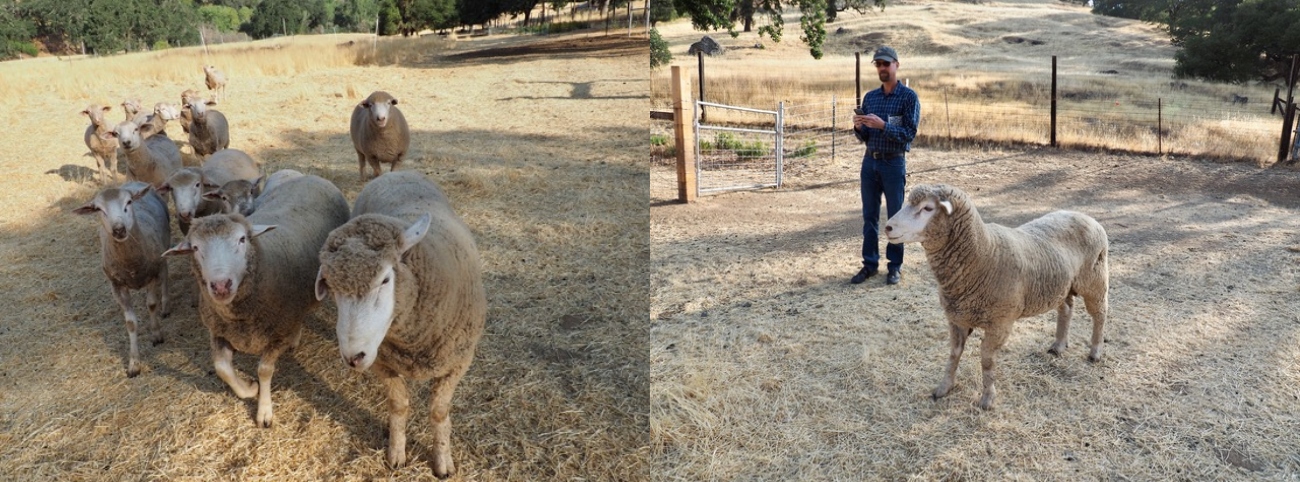
Hopland Research and Extension Center’s Hedgerow
Written and Photographed by Karen Rifkin Before entering the fenced-in area of hedgerow plantings, a flock of friendly rams trot up, eagerly, to see if it’s feeding time. Realizing their exertion is for naught, they just as quickly disperse back into the field at the Hopland Research and Extension Center, a 5,358-acre working ranch and […]
Read More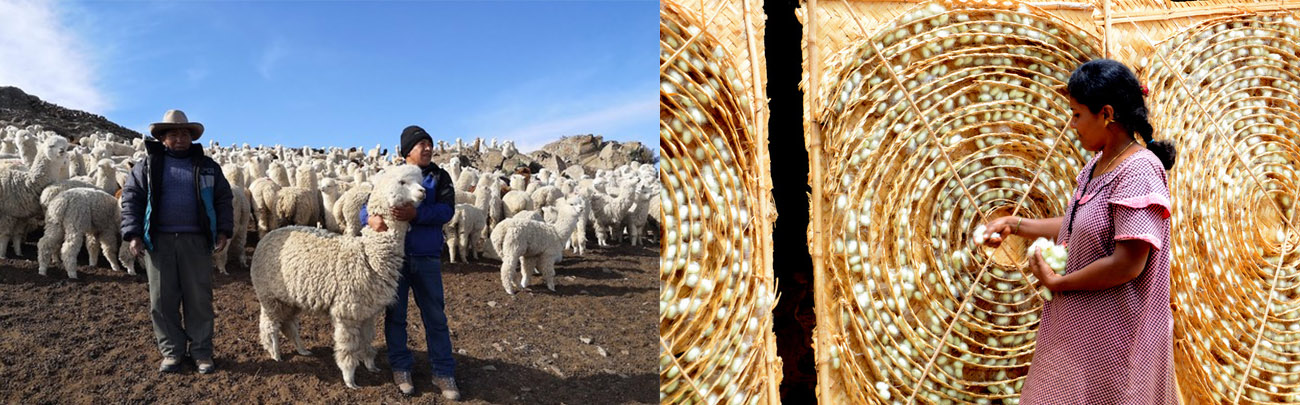
‘Sustainable’ Fashion Forgot Where It Came From
Written by Veronica Kassatly ( This is just a quick primer. Anyone looking for more in depth analysis will find it in “The Great Green Washing Machine Part 1:Back to the Roots of Sustainability.”) Defining Sustainability: Back to the Roots In fashion, sustainability appears to have become an elitist, even imperialistic concept in which the […]
Read More