

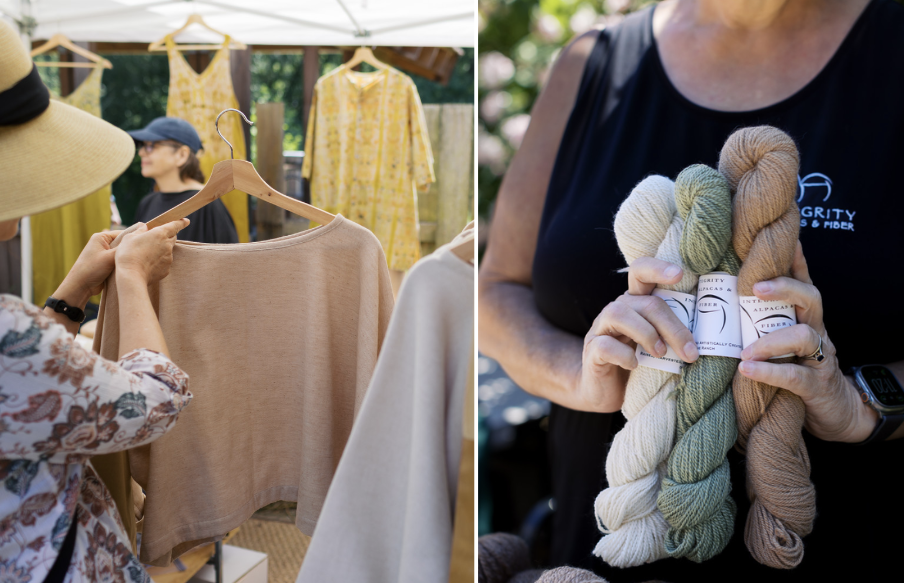
Photography by Paige Greene.
California is taking a bold step toward tackling one of the most overlooked parts of our waste crisis: textiles. The Responsible Textile Recovery Act of 2024 (RTRA), also known as SB 707, directs CalRecycle to create an extended producer responsibility (EPR) program for clothing and other textiles.
The law sets an ambitious mandate—emphasizing repair and reuse while minimizing hazardous waste, greenhouse gas emissions, and the public health impacts that come from the way textiles are currently made and discarded.
But that’s no small task.
The fashion and textile industry is plagued by overproduction, fueled by artificially cheap plastic fibers. Today, plastic makes up 66% of all textile fibers. These fossil-derived materials aren’t designed to be recycled safely, and they disproportionately harm communities at every stage of their life cycle, from fracked gas extraction to incineration of waste in the Global South.
Diverting textiles from landfills is critical, but it won’t be enough.
If California is serious about reducing climate and environmental justice impacts, we need to think bigger: using this new law as a lever to rebuild regional, natural, and biodegradable fiber industries that offer safer and more sustainable alternatives.

Natural Fibers Are Key
Plastic-based textiles will always carry hidden costs. By contrast, California has an opportunity to strengthen its natural fiber economy by supporting wool, cotton, and other fiber crop growers to adopt soil regenerative farming practices. With the right investment, these systems can:
- Support rural and land-based economies
- Expand carbon farming and regenerative agriculture
- Create regional precision manufacturing, and design based livelihoods
- Reduce and eventually eliminate our reliance on global commodity markets that undervalue ecological practices
Some of the infrastructure is already in place. What’s missing is investment to close the gaps and bring more of this production back home.

What We’re Asking of CalRecycle
For the RTRA to succeed, CalRecycle’s implementing regulations need to be both ambitious and practical.
Following CalRecycle’s first public workshop on July 17 and the subsequent open comment period, Fibershed, through the Healthy Textiles Coalition—a new initiative launched in partnership with Just Zero—submitted both oral and written comments to help guide the development of these regulations.
Here are some of the top priorities we emphasized:
1. Data, Transparency, and Education
You can’t fix what you don’t measure. CalRecycle should require producers to disclose the fiber makeup, quantity and fate of all textiles sold in California, with independent review and public access. Consumers also deserve better information, from clear labels like “Contains plastic” or “Compostable” to education campaigns that encourage reducing consumption in the first place.
2. Fees That Drive Real Change
The EPR program will be funded by producer fees. To be effective, these fees must:
- Fully cover end-of-life costs, from sorting to recycling to education
- Incentivize natural fibers and penalize polluting materials
- Prioritize funding for reuse, repair, and upcycling (not just collection and landfilling)
- Direct at least 10% of funding to rebuild California’s natural fiber manufacturing
In other words: no “pay to pollute.” Fees should be structured to reward better design and materials from the start.

3. A Shift Away from Fossil-Fiber Dependence
The law requires CalRecycle to address design challenges like microplastic shedding and toxic chemical use. That means regulations must explicitly drive a transition away from fossil-based textiles and toward natural fibers that can safely return to the soil at the end of their life. Chemical “recycling” of plastics using technologies like pyrolysis and gasification should not be considered recycling. They’re toxic, carbon-intensive, and only extend dependence on virgin plastic.
4. Oversight and Accountability
To avoid loopholes and greenwashing, CalRecycle must ensure strong oversight:
- Penalties collected from producers should fund remediation in communities most impacted by textile waste, including those overseas.
- The Producer Responsibility Organization (PRO) governing board must include diverse voices, especially from reuse, repair, and international secondhand markets.
- PRO meetings should be transparent and accessible to the public.

The Bigger Picture
Diverting clothing from landfills is necessary, but it’s not enough. The real opportunity here is to transform how textiles are made in the first place. By prioritizing regeneratively grown natural fibers, California can cut pollution, support our state’s economy and lead the way toward a truly circular textile system.
The stakes are high, but so is the potential.
With the right rules, the Responsible Textile Recovery Act can help California move away from waste colonialism and fossil-fiber dependency and toward a system that values health, equity, and resilience.
To read the full comment letter, visit the Healthy Textiles Coalition website, and for those interested in staying up to date, be sure to subscribe to CalRecycle’s Textile Stewardship Newsletter.