

Words by Cassandra Marketos, Photographs by Paige Green
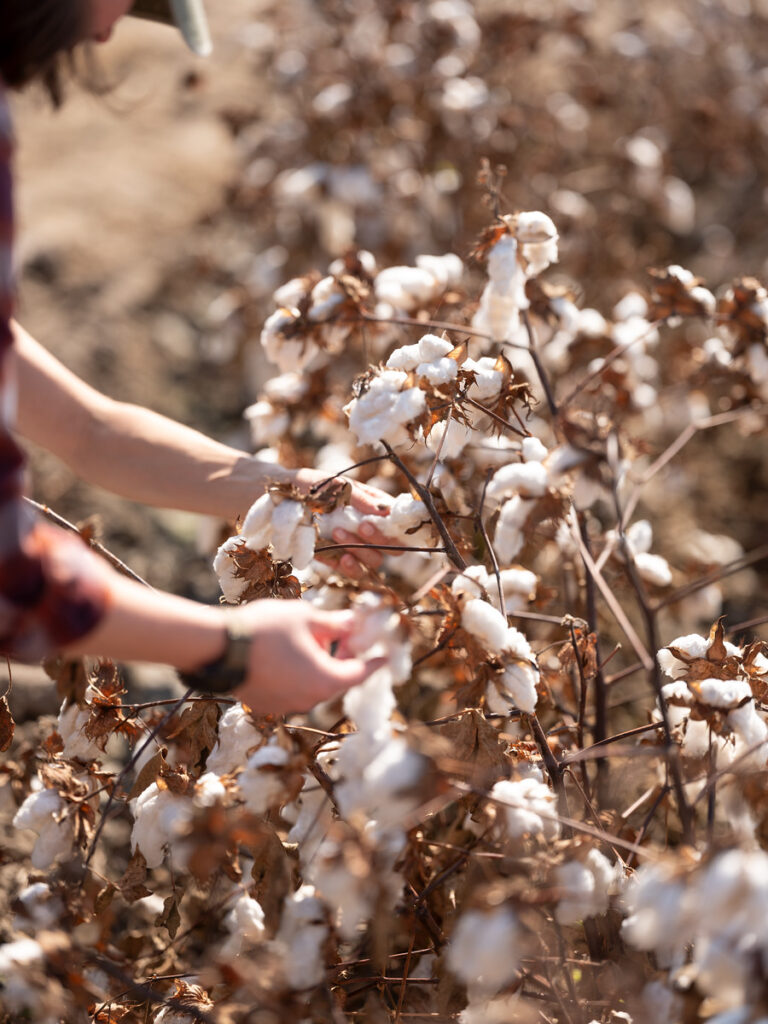
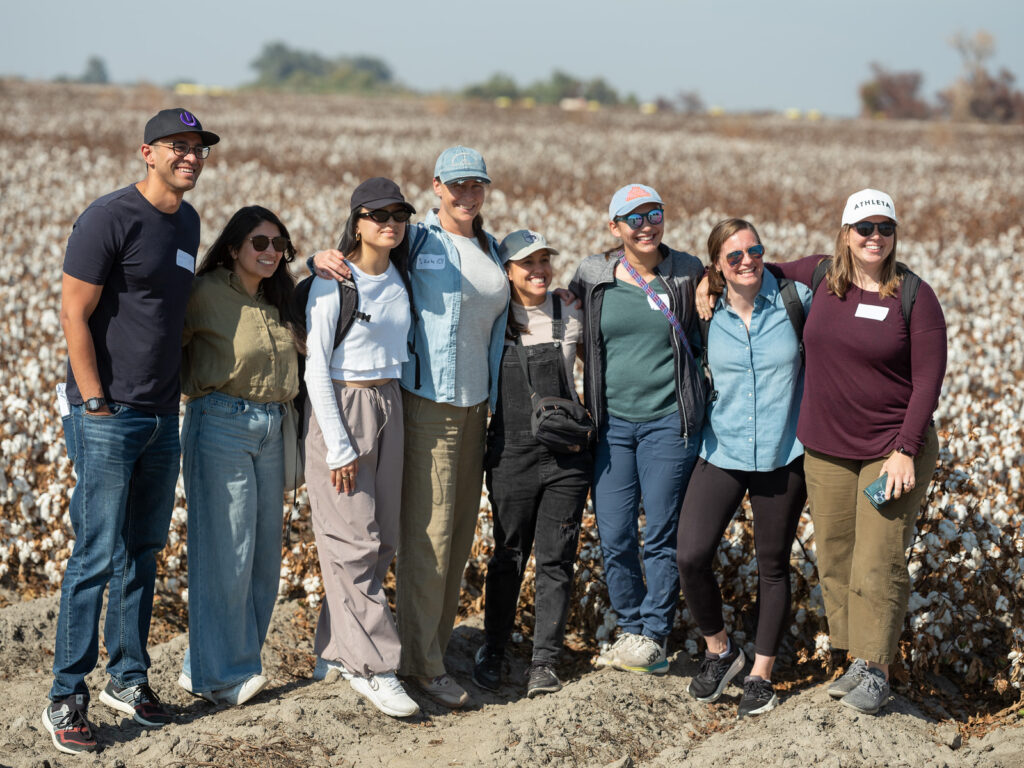
This fall, we brought 67 people, including teams from some of the world’s largest retailers, knitting manufacturers, and technical assistance providers, to Bowles Farming Company in Merced for a field tour during the cotton harvest. Our goal was to show attendees what it truly means to invest in cotton, when it’s grown for the health of the entire ecosystem—not just the lowest price point.
For the past three years, the cotton at Bowles has been grown using Fibershed’s Climate Beneficial™ Verified B5 Framework, a set of practices designed to regenerate soil, restore biodiversity, and reimagine how textile crops can coexist with their environment. Though the acreage devoted to this transition remains small for now, its outcomes have been outsized.
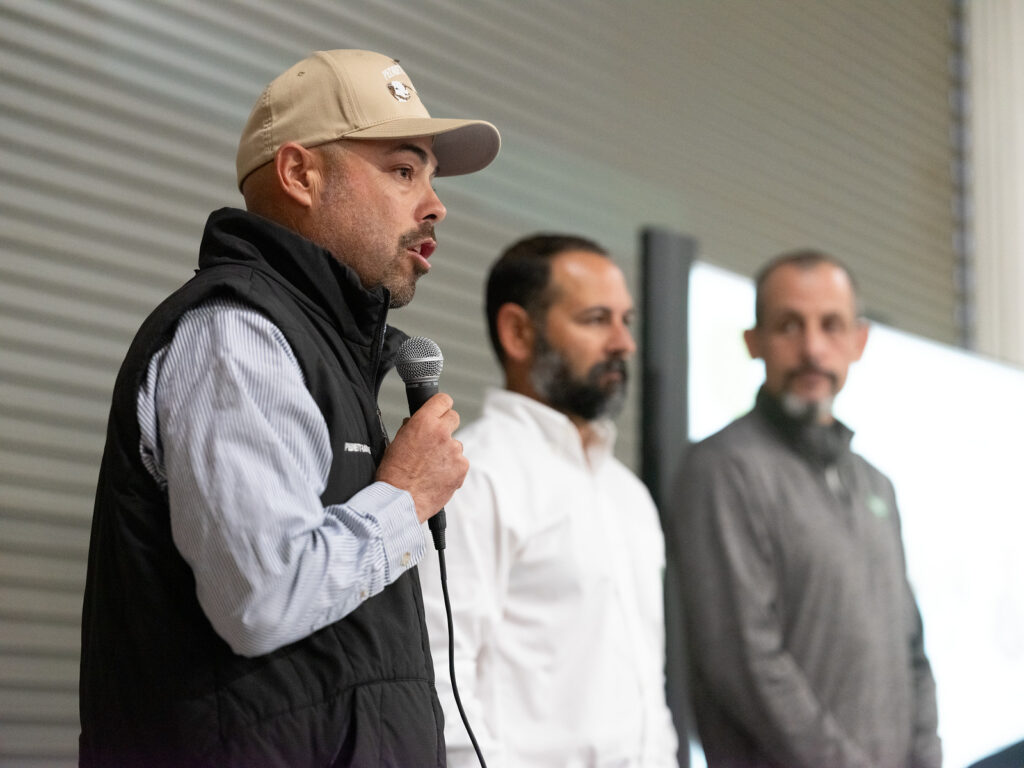
The morning opened with three farmers standing before the group, speaking candidly about their shared commitment to a different way of growing cotton. Cannon Michael, CEO of Bowles Farming Company and a sixth-generation farmer, Derek Azevedo, Executive Vice President of Bowles Farming Company, and Gino Pedretti, CEO of Pedretti Ranches Inc. and a fourth-generation farmer, shared their experiences growing up on farms, running agricultural businesses, and finding ways to make ends meet while also meaningfully supporting their employees and the environment that sustains their work. To them, the Climate Beneficial™ practices that regenerate soil and support biodiversity are more than just nice things to do. They are a necessity for creating a sustainable business.
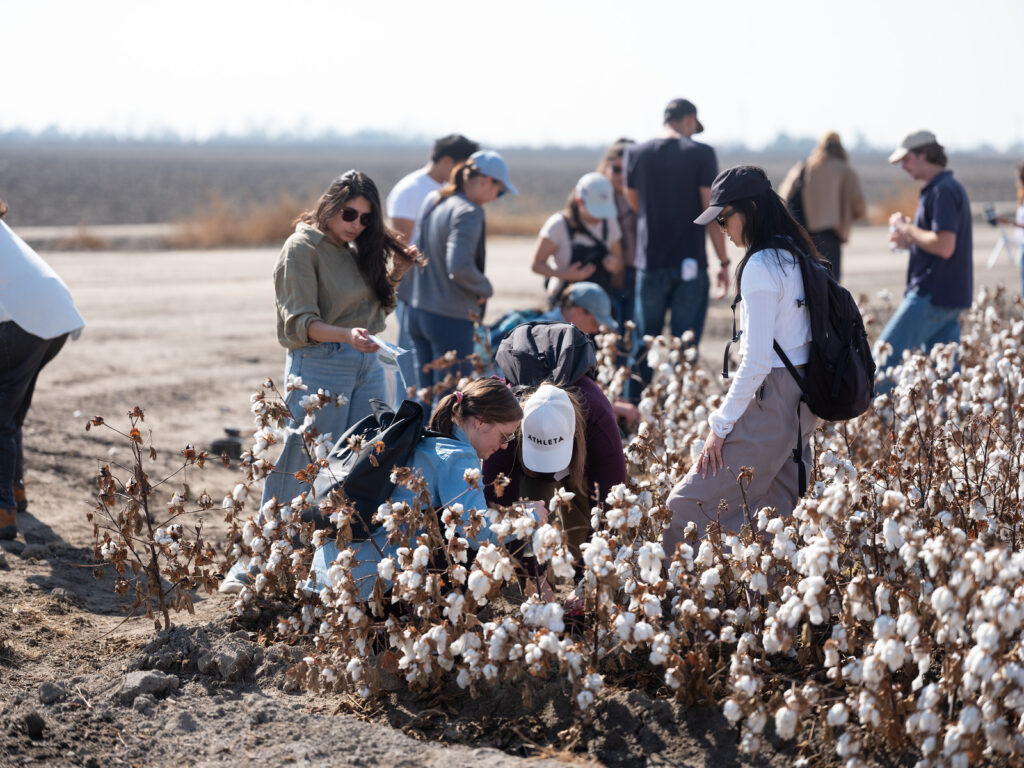
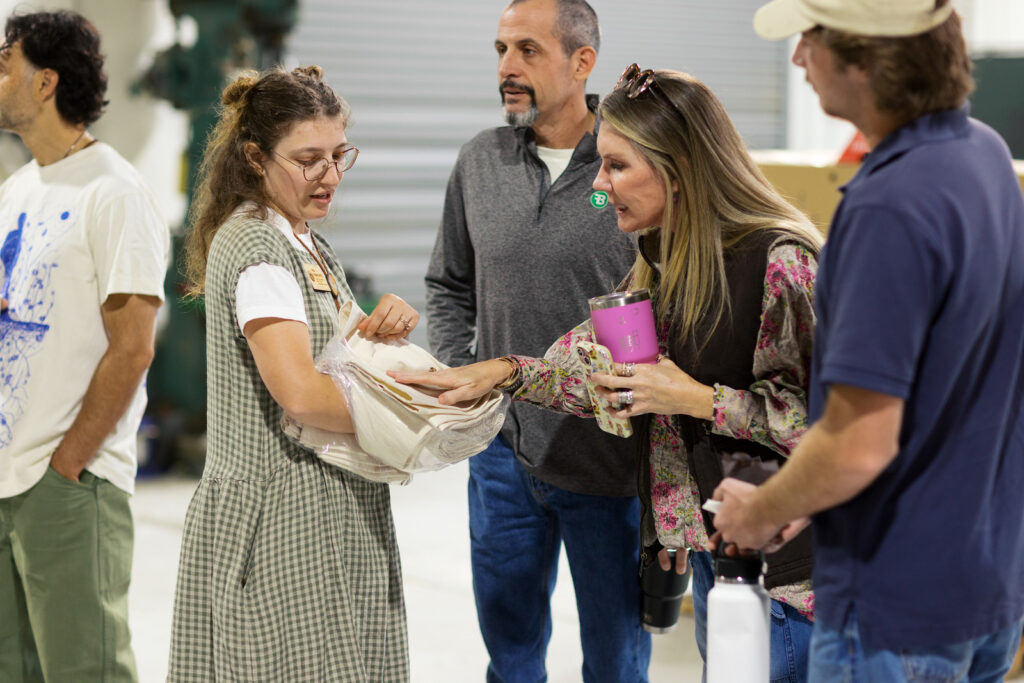
Attendees then boarded buses that carried them into the heart of the cotton harvest. As guests stepped off and walked between the rows, the differences between conventional agriculture and Climate Beneficial™ were able to be directly experienced. We heard the hum of insects and the calls of Pacific Flyway birds overhead, saw the shimmer of a protected wetland at the field’s edge, and beneath it all, felt the living, carbon-rich soil sustaining cotton grown in balance with its surroundings.
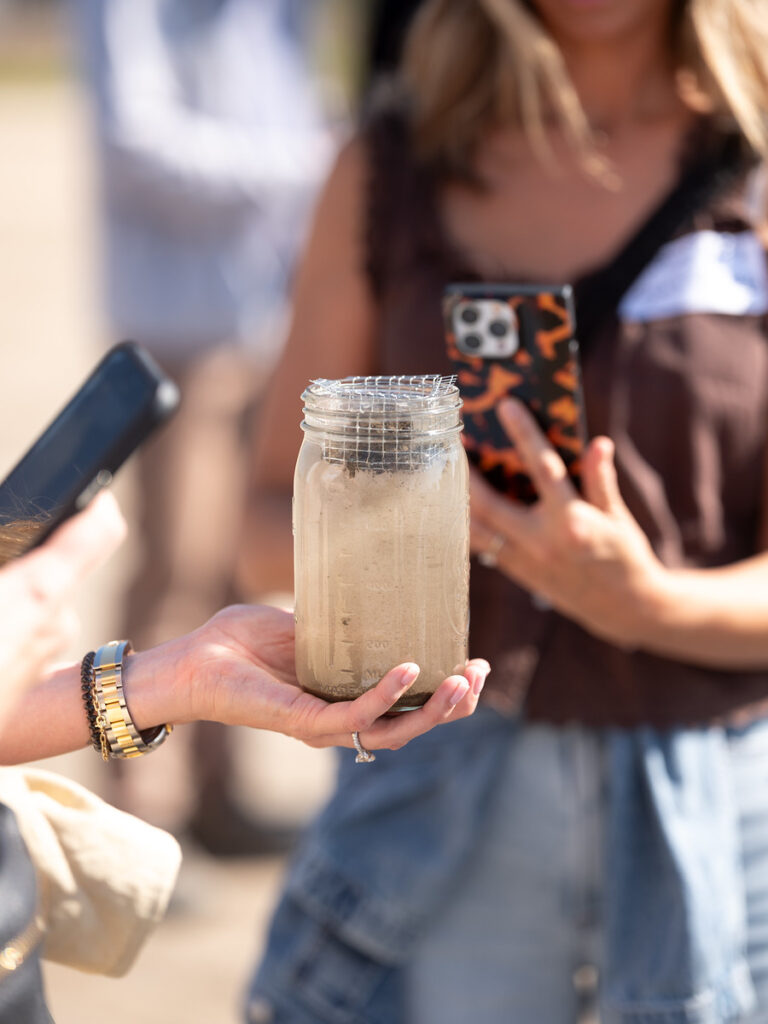
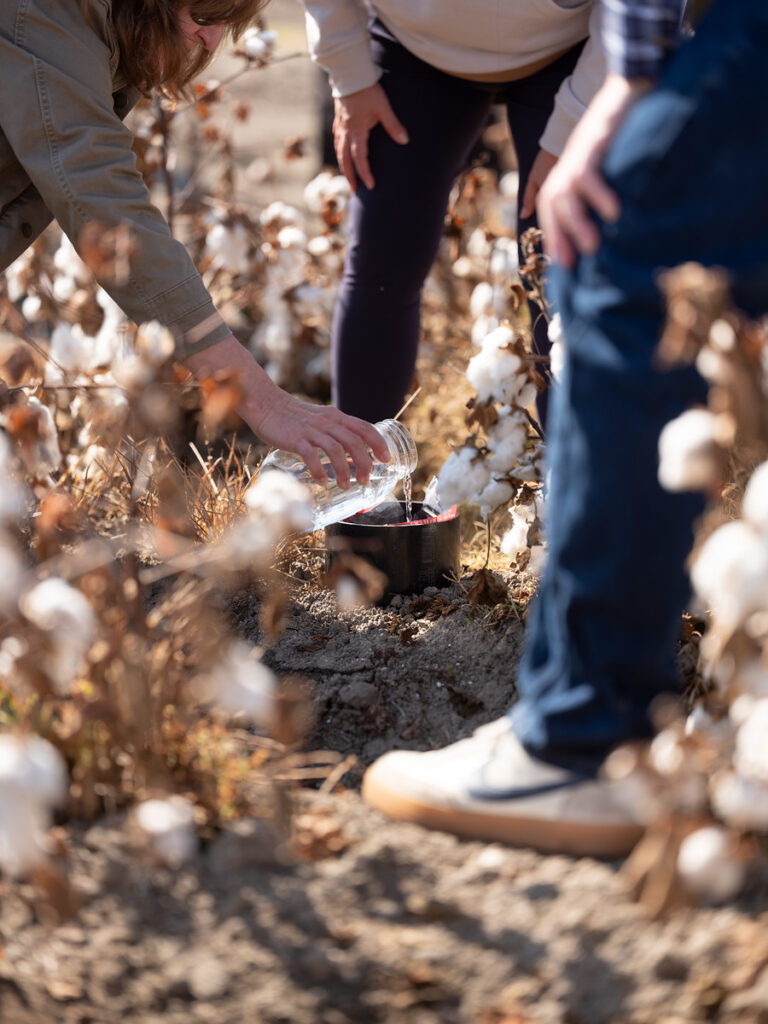
At the field, participants split into small groups and rotated through hands-on learning stations. At one, a simple demonstration showed how water poured through regenerative soil absorbed and held steady, while water poured through conventional soil failed to absorb—instead, running off and creating a miniature flood. The visual contrast spoke volumes about the value of regeneratively grown soils and their ability to protect natural resources. At another, a water infiltration test was performed, designed to simulate 1” of water landing on the ground in a rain event. The goal was to determine how quickly this rainfall could be absorbed by soils that were highly compacted versus less.
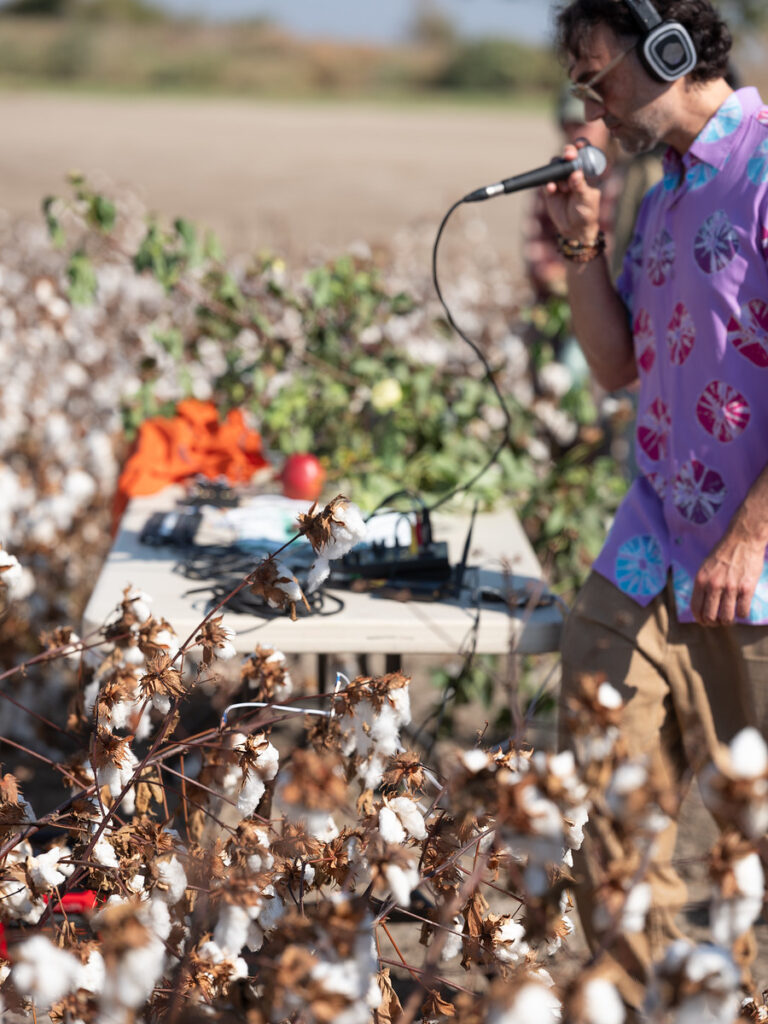
At another station, musician Modern Biology translated the unseen world into sound. Using sensors that converted the electrical signals of plants, soil, and even human touch into music, guests listened through headphones to the rhythms of a living ecosystem.
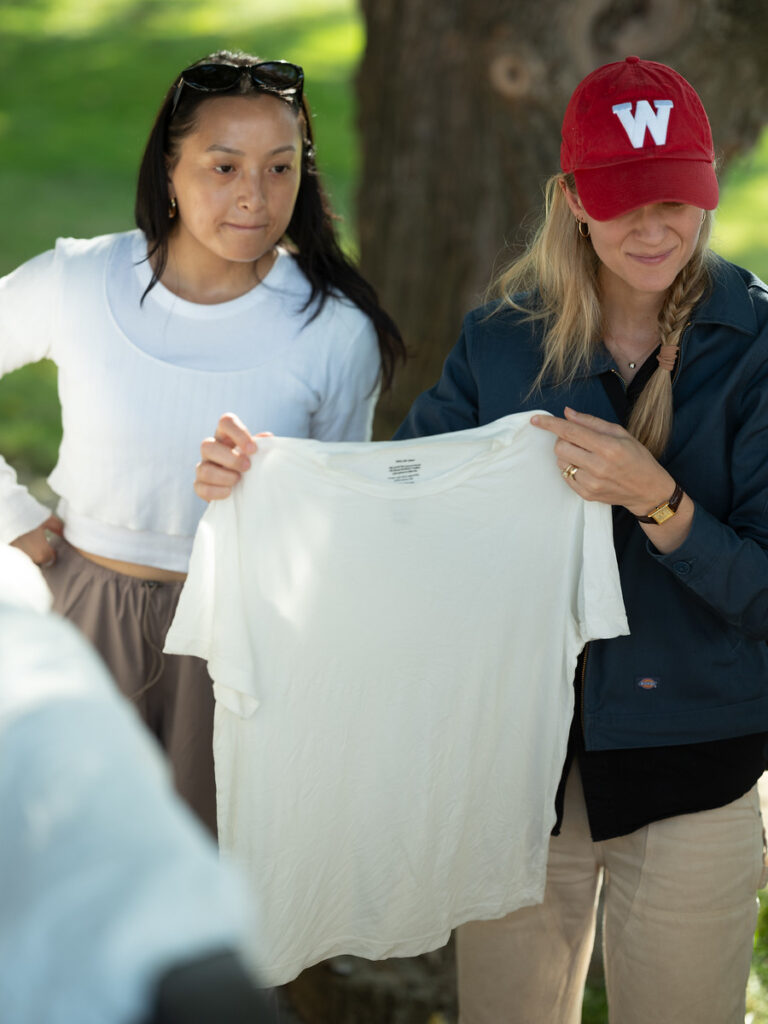
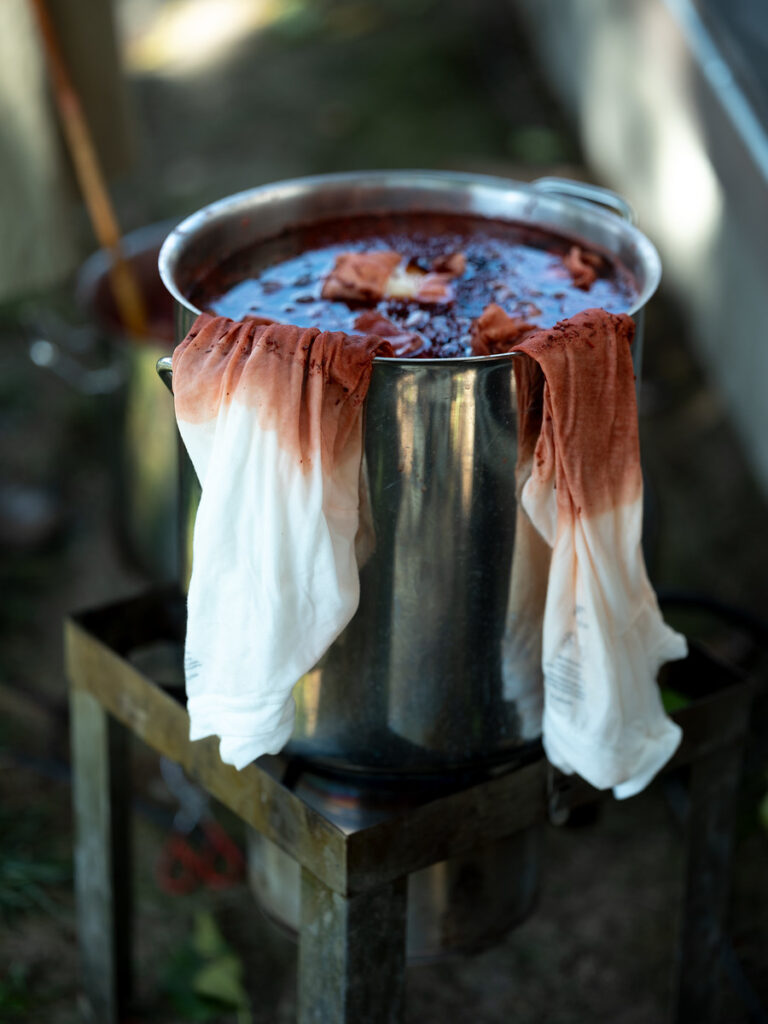
When the group returned from the fields, lunch offered another form of immersion. Led by Fibershed’s own Nica Rabinowitz, participants experimented with natural dyeing, transforming cotton shirts into rich shades of red using madder root—a tangible expression of connection between soil, plant, and textile.
After lunch, the group gathered once more for a final round of presentations. Technical Assistance Provider Brady Colburn shared insights into the science of healthy soils and carbon sequestration, grounding the day’s experiences in measurable ecological outcomes. Fibershed’s Mary Kate Randolph followed with an overview of our ongoing work to support farmers transitioning to the B5 Framework. She demystified what that process entails and reminded attendees that this is not a quick or easy shift. It requires time, technical guidance, sustained partnership, and financial investment. Her message was clear: transformation on the land is possible, but it depends on collective commitment and long-term support. We also heard from Point Blue Biologist Bonnie Eyestone who discussed Bowles Farm participation in the Roots program and their development of miles of hedgerow for migrating bird species.
When the group returned from the fields, lunch offered another form of immersion. Led by Fibershed’s own Nica Rabinowitz, participants experimented with natural dyeing, transforming cotton shirts into rich shades of red using madder root.
After lunch, the group gathered once more for a final round of presentations. Technical Assistance Provider Brady Colburn shared insights into the science of healthy soils and carbon sequestration, grounding the day’s experiences in measurable ecological outcomes. Fibershed’s Mary Kate Randolph followed with an overview of our ongoing work to support farmers transitioning to the B5 Framework. She demystified what that process entails and reminded attendees that this is not a quick or easy shift. It requires time, technical guidance, sustained partnership, and financial investment. Her message was clear: transformation on the land is possible, but it depends on collective commitment and long-term support. We also heard from Point Blue Biologist Bonnie Eyestone who discussed Bowles Farm participation in the Roots program and their development of miles of hedgerow for migrating bird species.
The day concluded with a major announcement: Fibershed collaborators at Sierra Spinning will open a new spinning facility on-site, restoring a critical link in the regional textile supply chain that has been missing from the West Coast for decades. It marked a turning point and signaled that with sustained investment, a regional and regenerative textile economy can indeed be rebuilt.
These transitions are exciting, but it is important not to lose sight of what they ultimately cost growers. Eliminating glyphosate alone can cost between $800 and $1,400 per acre, and removing WHO Class Ia ‘Extremely Hazardous’ chemistries requires additional operational changes, new equipment, and more labor. These shifts are not small, and they are not inexpensive, which is why grower support and investment from the folks we had on tour that day, are so essential.
Luckily, the early Climate Beneficial™ cotton growers in California are demonstrating what becomes possible when those investments are made. Across our three early adopters, includes Bowles Farming Company, nitrogen use has dropped an average of 37% from conventional baselines, with a 20% year-over-year decrease, synthetic pesticides have fallen by 40%, and the average GHG impact has reached 1.77 MT CO₂e of reduction and sequestration per acre in 2024. Soil organic carbon has risen an average of 65% in the first two years, with the earliest adopter seeing a remarkable 140% increase. This is remarkable and promising progress.
What unfolded in Merced was the Fibershed mission in action: bridging science, community, and stewardship to build a textile future that nourishes both ecosystems and economies. And for the 67 people who joined us, we tried to make that something they could see, touch, hear—and even dye for themselves.
We are deeply grateful to Bowles Farming Company for opening their fields and to farmers like Cannon Michael and Gino Pedretti for their leadership, courage, and belief in this work. Their collaboration and commitment made it possible for all of us to come together and witness what a future of investment in Climate Beneficial™ cotton could look like.