

Words by Cassandra Marketos, Photographs by Paige Green
Loren Poncia had been waiting for the rain.
A fourth-generation rancher and co-operator of Stemple Creek Ranch with his wife Lisa, Loren had been watching his land through years of drought, feeling the strain that every rancher in the region knew. When the storms finally came, he went out to check his pond. His neighbors’ ponds were filling. His wasn’t. Initially, his heart sank.
It took him some time to work out what was actually happening. The soil on his ranch, built up over years of Climate Beneficial practices like rotational grazing and compost application, was absorbing the rainfall. Typically, the pond filled from runoff after heavy rains, but that day the soil proved healthy enough to absorb and hold the water. The pond’s emptiness was a signal —even if a counterintuitive one — that the Climate Beneficial practices he’d been deploying were actually working.
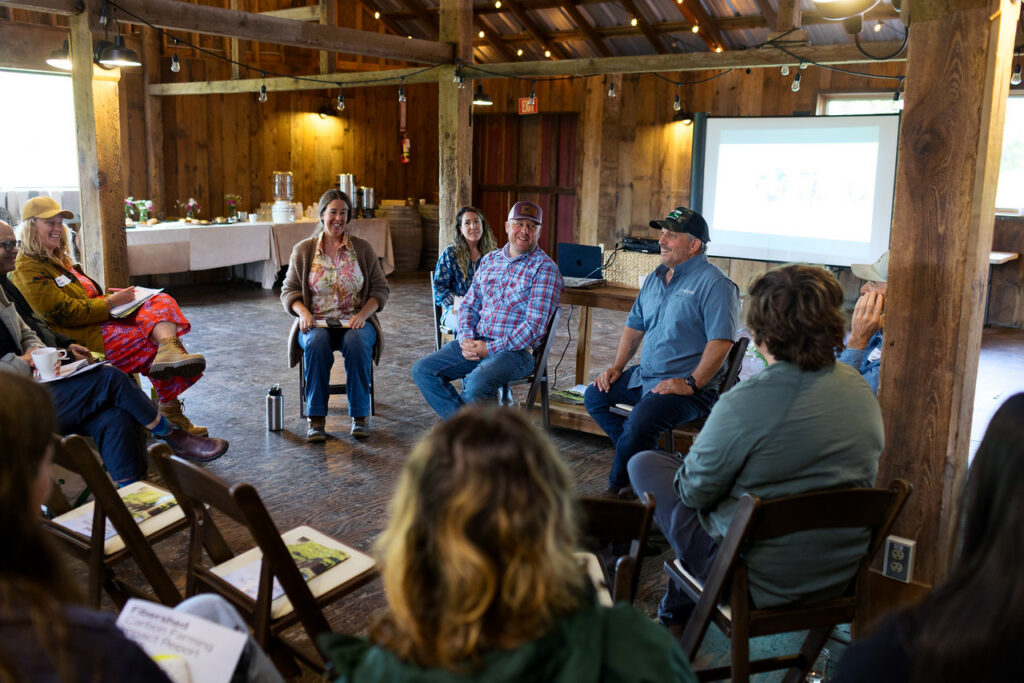
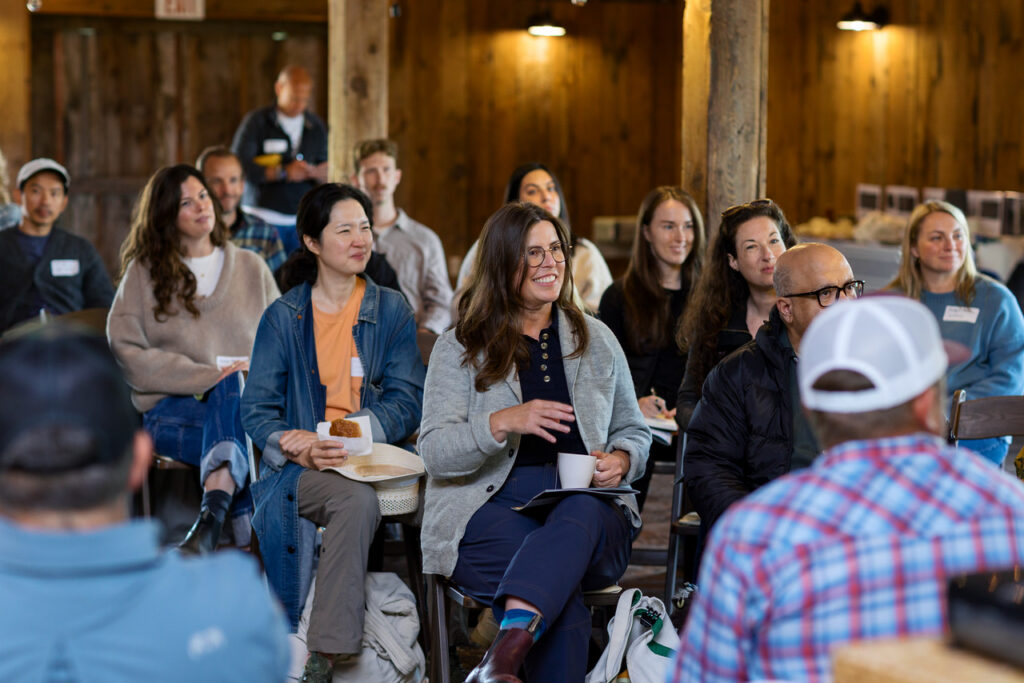
This story, which had occurred several years ago, was conveyed by Loren himself to attendees of Fibershed’s Climate Beneficial Ranch Tour, which took place at Stemple Creek Ranch in Tomales, California in late May of this year. Brands, growers, technical advisors, and guest speakers had all gathered together at the invitation of Fibershed, to experience Climate Beneficial work firsthand.
The morning opened with “Grower Perspectives,” a roundtable conversation between Loren Poncia, Jim Jensen of Jensen Ranch and Tomales Sheep Company, and Jaime Irwin of Kaos Sheep Outfit, a first-generation rancher, a sixth-generation rancher, and a fourth-generation rancher, respectively, all speaking to why they have committed to Climate Beneficial practices. Brands in the audience — among them Reformation, Taylor Stitch, Coyuchi, and Avocado Mattress — were there to understand why it mattered to source quality material from growers like the people in front of them.
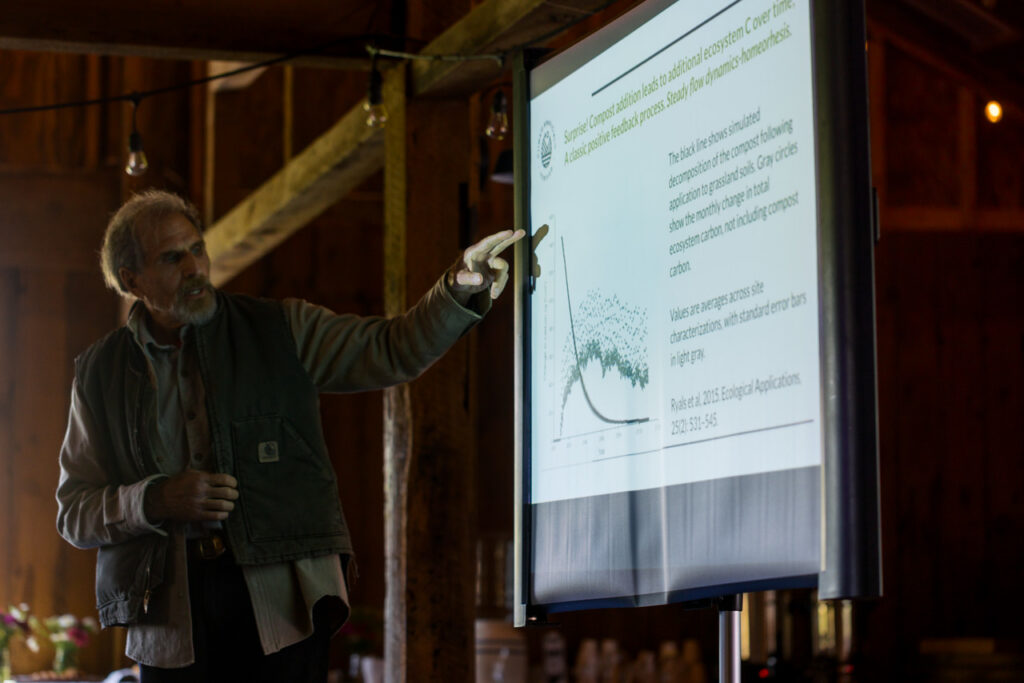
From there, the group heard from working scientists and program directors who are responsible for tracking and quantifying the impact of CBV. Dr. Jeff Creque of the Carbon Cycle Institute shared some powerful compost research findings: a single half-inch application of compost to standing grassland in 2008 resulted in above-ground production exceeding control plots by 40 to 70 percent for every year that followed. Nancy Scolari, Executive Director of the Marin Resource Conservation District, spoke about watershed health and water quality at Stemple Creek, and about the Marin Carbon Project’s collaborative work on climate-smart agriculture across the region. Isaiah Thalmayer, Restoration Director of the STRAW Program, detailed the creek and habitat restoration his organization had spearheaded at Stemple Creek, totaling more than 1.6 miles of riparian corridor restored and over 2,500 native plants installed.
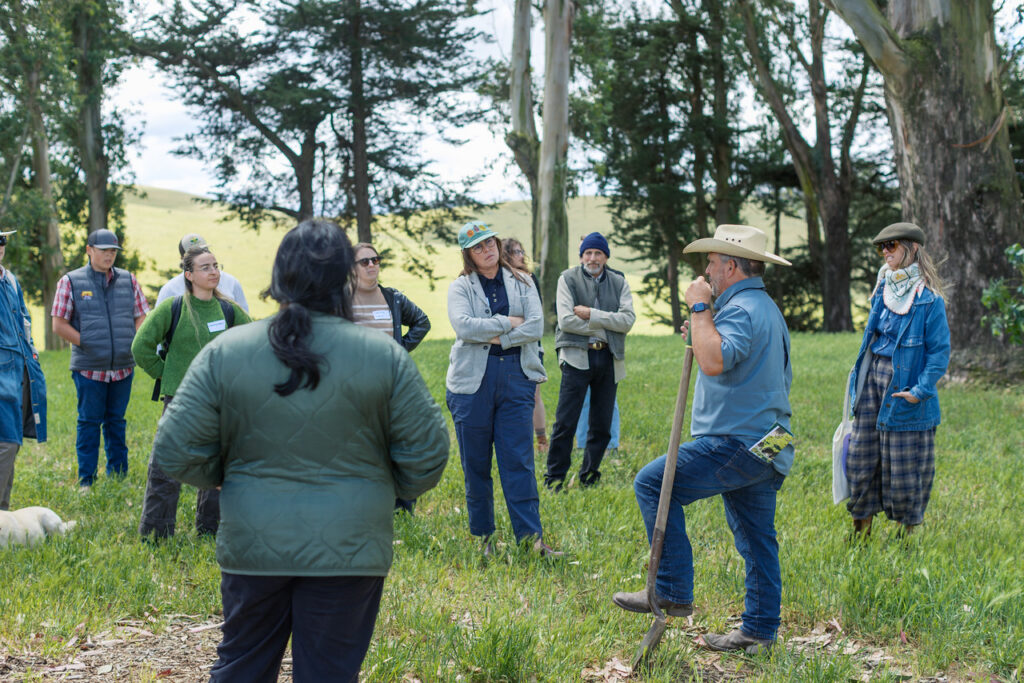
Then everyone went outside.
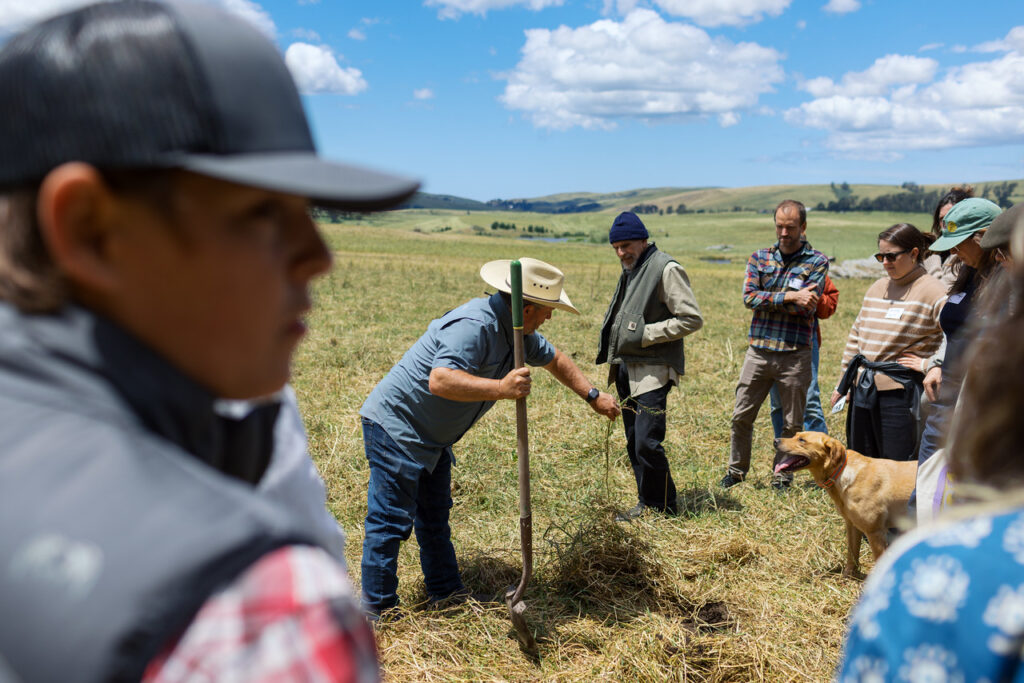
Walking Stemple Creek’s pastures, the group now had both the practical knowledge and the wisdom shared to understand what they were seeing in the land around them. Loren walked them through the ranch’s management practices, showed them the compost site, led them along the restored riparian creek corridor, and dug out a few shovelfuls of earth to show what healthy soil actually looks like: dark and loamy, and even a few visible worms.
If this progress is particularly legible at Stemple Creek, that’s because they’ve been part of Fibershed’s Climate Beneficial verification program for 13 years, the first ranch in the country to put a carbon farm plan in the ground. The Poncias manage roughly 1,000 acres at the home ranch and close to 8,000 more across leased land in Marin, Sonoma, and beyond. Over that time, they’ve restored a creek, planted thousands of trees, brought back dozens of bird species, and spread compost on every acre, building pastures that hold water and carbon better every season. The ranch has drawn down 15,825 MT CO₂e over 13 years of verified practice.
After the walk, the group returned to the barn for lunch, an unhurried meal that gave people room to keep talking. The afternoon closed with presentations from the Fibershed team and our partners on what it looks like for brands to actually source Climate Beneficial certified materials.
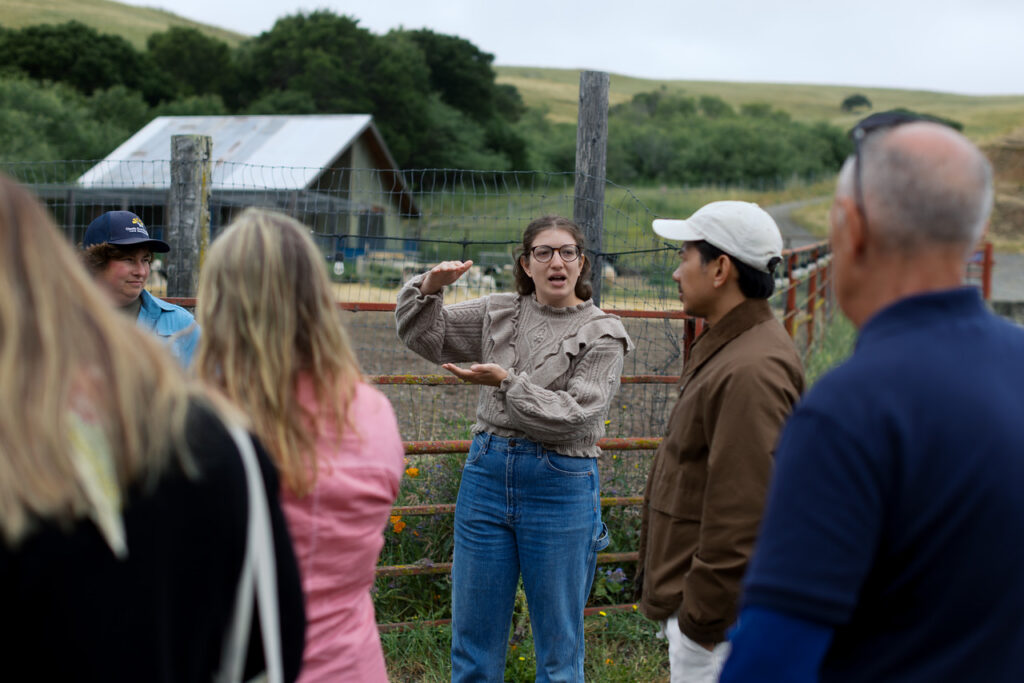
Noah Link, Carbon Farm Planner at the Carbon Cycle Institute, and Owen Walsh, Carbon Program Manager at Carbon Friendly, walked through the tools available to brand and mill partners for impact measurement and reporting. Mary Kate and Nica presented the impact measurement and claims framework. By working with Carbon Friendly and AusQUAL as third-party independent verifiers, CBV is able to quantify emissions, removals, and soil carbon at the bale level, creating transparent, product-linked climate data. This gives brands access to primary data for Scope 3 reporting, product carbon footprinting, and claims under leading frameworks including the GHG Protocol, SBTi, and ISO standards, moving beyond sustainability claims into measured outcomes tied to specific fiber.
The day closed with a mill discussion and refreshments, anchored by Steve Weinstein and Susana Raquet. Susana, who runs Engraw, one of the last family-owned mills in Uruguay, had flown in specifically to be part of this gathering.
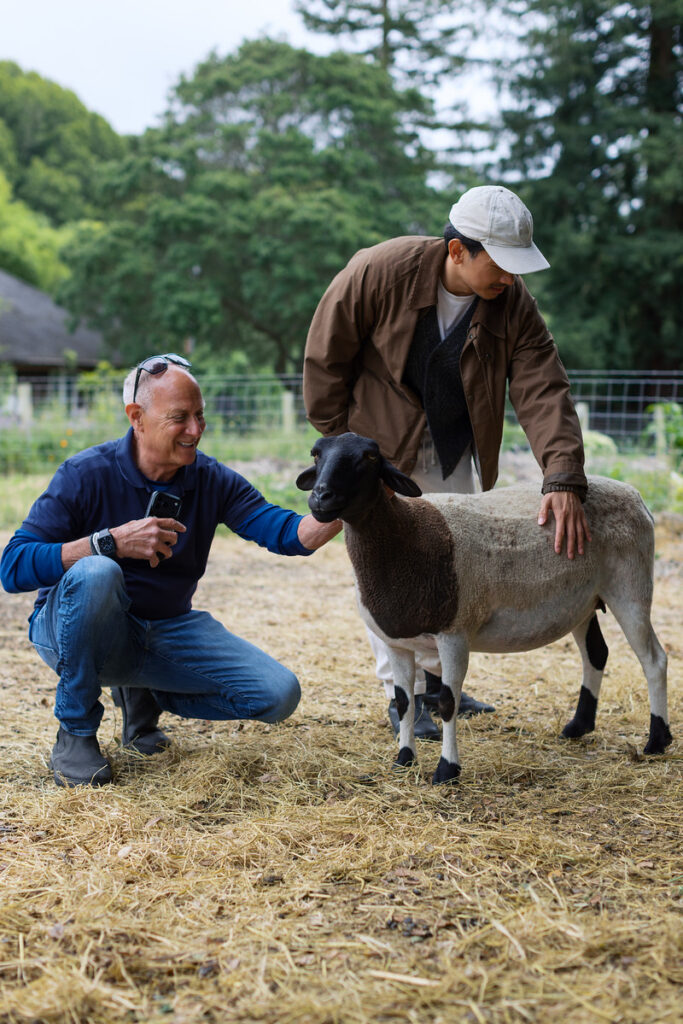
For day two, the group made their way to the Learning Center at Black Mountain Ranch in Point Reyes for a closer look at wool, land restoration, and soil health, hearing from Fibershed founder Rebecca Burgess, and Nica Rabinowitz, Fibershed’s Supply Chain Director, who shared carbon farming and land restoration in practice at the Learning Center. Attendees were able to take a close look at the wriggling worms in the happy compost at the Learning Center, and the decomposing cotton textiles in the piles from Harvest and Mill that represent the possibilities of a fully circular soil to soil cycle.
By the end of two days, people had walked more than they expected.They’d connected with new friends and greeted familiar faces. They’d asked questions, and found themselves in conversation with people they wouldn’t have met any other way. One attendee described arriving with expectations of useful industry insights and leaving with something closer to genuine inspiration, surprised by her own reaction. What she found was openness: growers and technical providers sharing successes and failures with equal honesty, remaining students of each other, working from a place of both curiosity and joy.