

Words by Melanie Martin, photographs provided by High Desert Fibershed Utah
A 100+ degree July day might not be the ideal time to get out your stockpot and start brewing up some dye in your neighborhood park. But since that’s when the phragmites were maturing, a group of us gathered at a community park in Riverton, Utah, to do just that.
Rachael Lauritzen, executive director of the High Desert Fibershed, greeted attendees and sent them off equipped with buckets, gloves, and hand clippers. The mission: to head to the nearby riverbank in search of phragmites that were ready to use for dye. Along the banks of the Jordan River, stands of phragmites—tall stalks with feathery tops bearing thousands of seeds—wafted in the slight breeze.
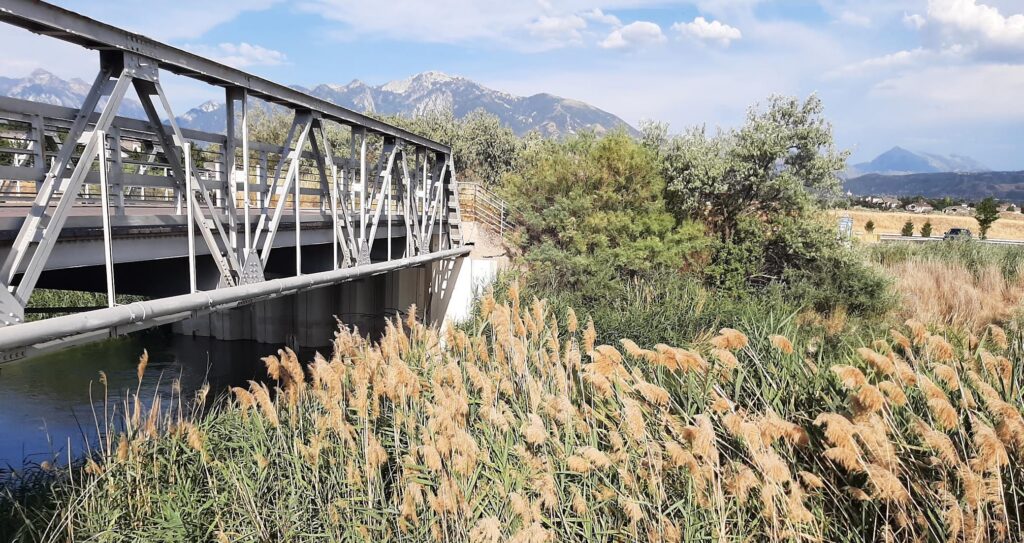
The dark brownish-purple plumes that were ready to use for dye were hiding within stands of whitish-beige ones, which were spent seeds from the year before and no longer useful for dye. To harvest them, participants scrambled down the riverbanks and reached into the thicket of reeds, breaking or cutting off the stalk below the seed head. Each attendee gathered 16–40 phragmites, as instructed, although one or two continued harvesting until there was scarcely a purple-brown phragmite to be found.
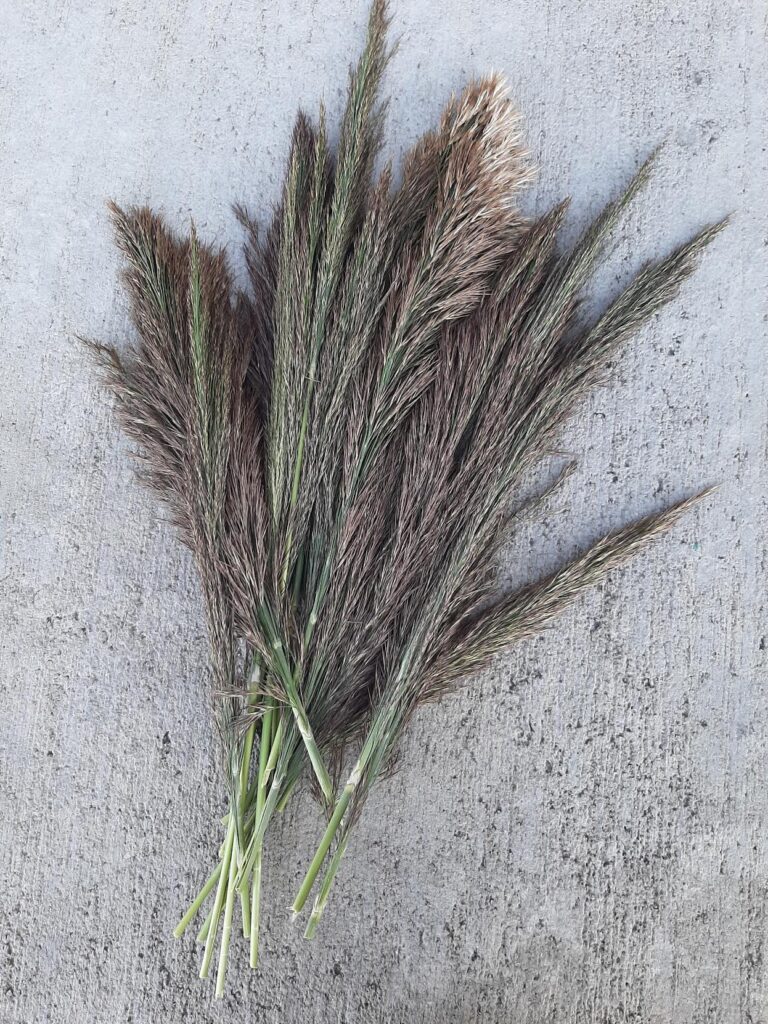
Considered a Class 3 noxious weed in Utah, phragmites australis grow abundantly along waterways like the Jordan River as well as the Great Salt Lake. While there are native varieties, this Eurasian subspecies is highly invasive, spreading quickly across aquatic habitats. The dye extracted from the plant also happens to produce a vibrant buttercup yellow. By putting the plants to good use, the High Desert Fibershed and workshop participants sought to help stop their spread along the Jordan River and the broader Great Salt Lake watershed while bringing greater awareness of the plants’ negative impact on the area.
Back in the shade of the park pavilion, everyone separated the seed heads from the stalks and started bringing them to a simmer in stockpots placed on electric burners. While we waited, giving the pots an occasional stir, representatives of the Jordan River Commission, Utah Sierra Club, and High Desert Fibershed talked about the importance of working to quell the spread of invasive phragmites.
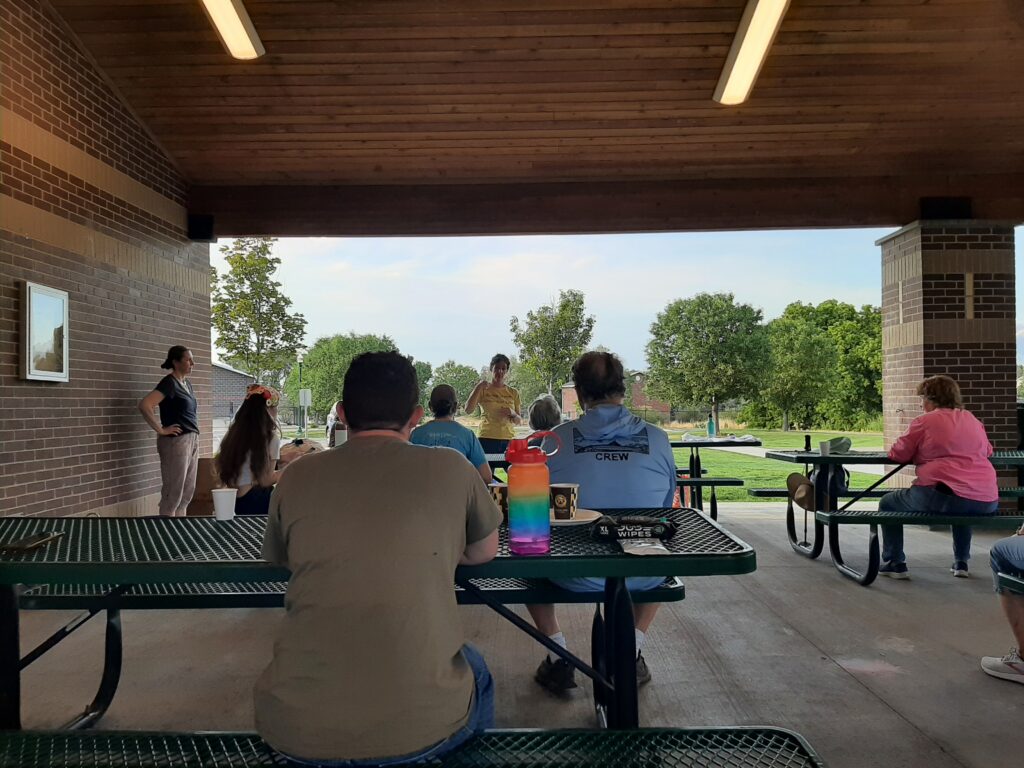
Invasive plants like phragmites take over niches once occupied by other species, explained Jens Ammon, restoration coordinator for the Jordan River Commission. While native animal species require a range of bushes, trees, and other plant life to thrive, phragmites form dense stands of stalks, decreasing this ecological diversity. As a result, populations of native fish, birds, and other species lose vital habitat.
What’s more, they often harm the environment by using copious amounts of resources. Phragmites consume three times as much water as native phragmites varieties and reduce the diversity of vegetation, noted Ammon. This places significant stress on the lake and the waterways that feed it. In The Salt Lake Tribune, Leia Larsen reports that phragmites drink up 71,000 acre-feet of water from the lake each year—equal to nine months of the Jordan River’s flow. Their thick stands of dried stalks also present a fire hazard, notes the Utah Geological Survey (UGS).
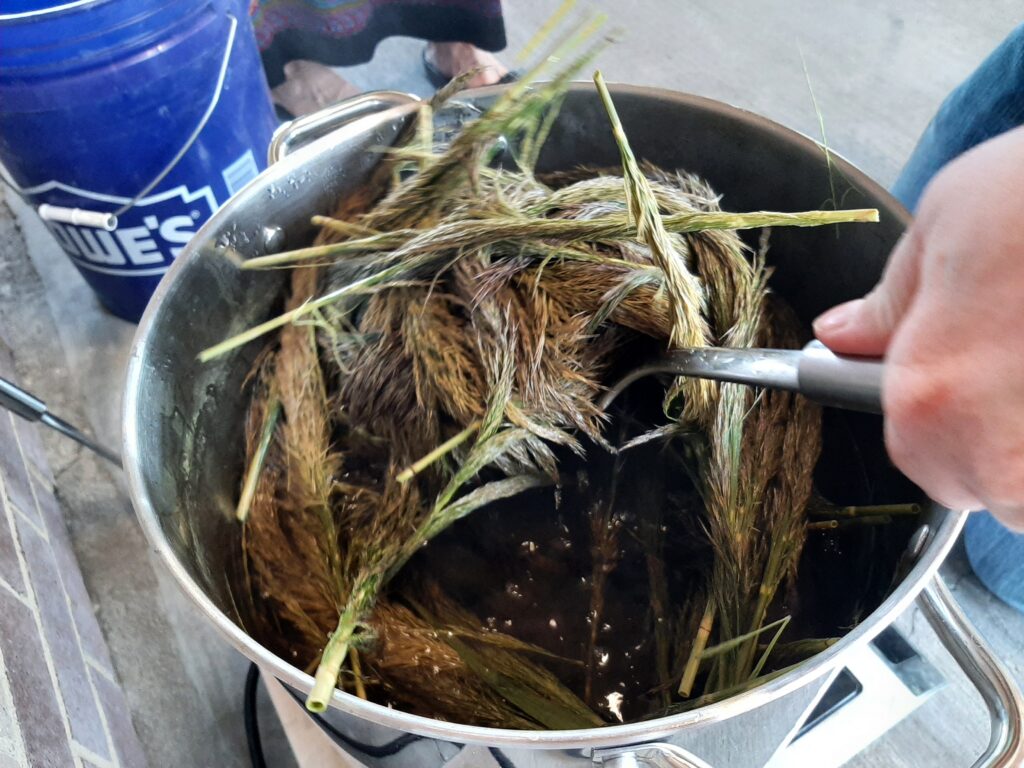
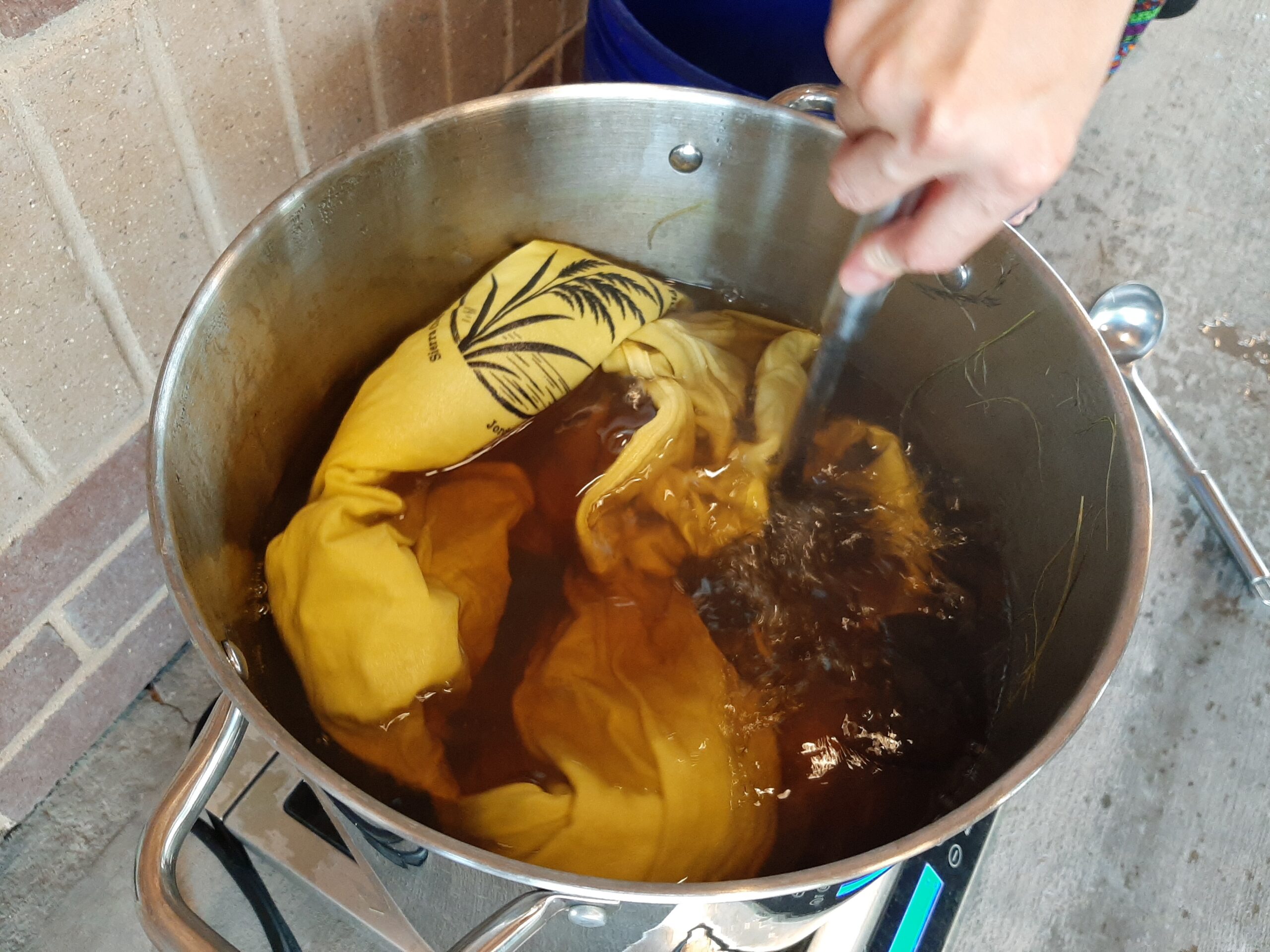
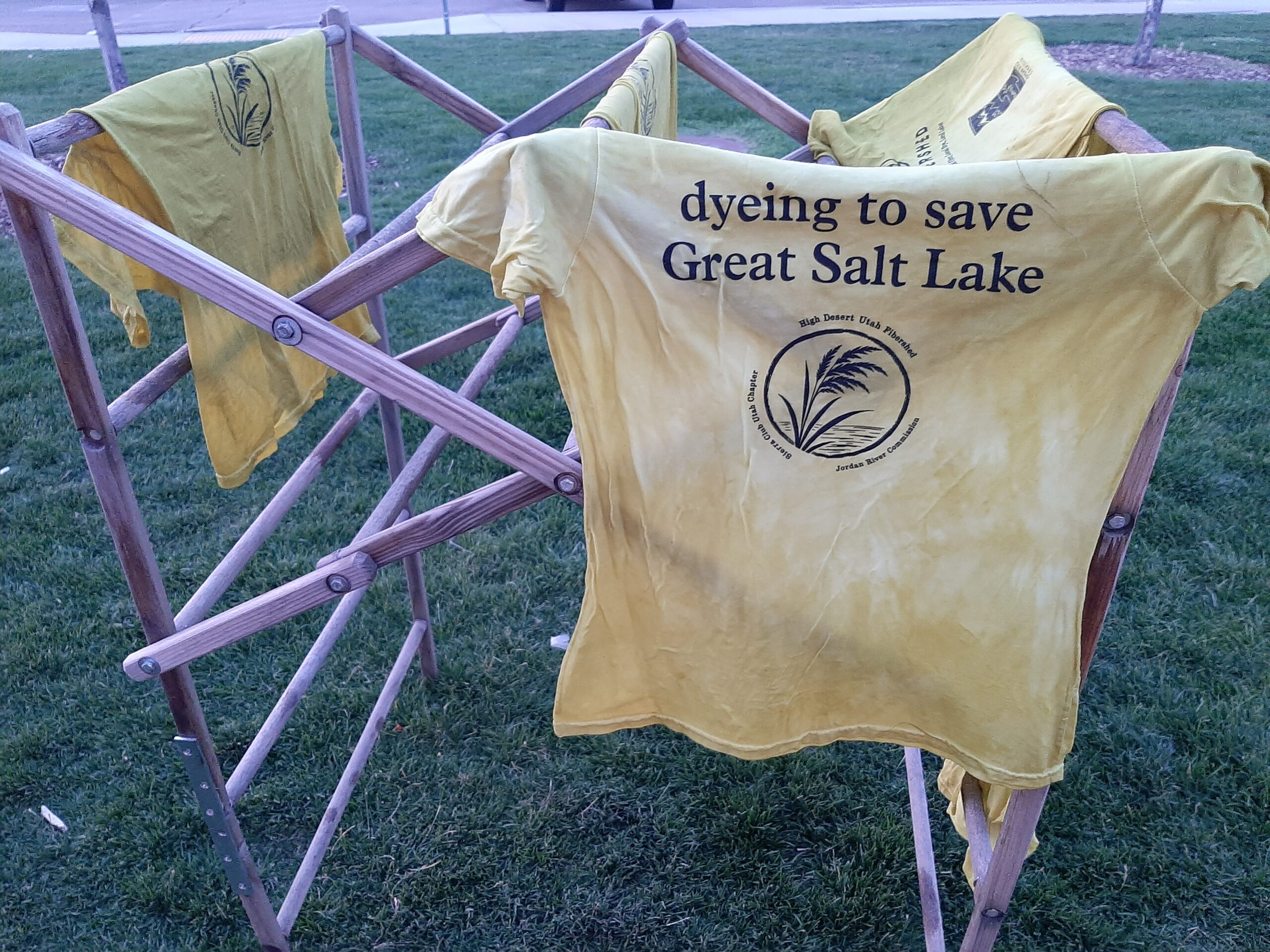
As speakers discussed these issues, T-shirts bearing the words “Dyeing to Save Great Salt Lake” soaked in buckets of water, letting the fiber expand to better soak in the dye. Aluminum acetate was used as the mordant on the cotton shirts. Once the water in the stockpots came to a simmer, participants placed the feathery plumes of phragmites into the pots. The plant matter would simmer for 30-60 minutes to extract the color from the plants. The dye bath was turning a murky yellow-green brown, and a not-unpleasant scent akin to steamed artichokes or canned corn rose into the air as attendees removed the lids and gave each pot a stir.
After extracting the dye from the phragmites, participants carefully removed the plant matter from the hot water. The shirts would then simmer in the dye for another 30-60 minutes as everyone drank ice water and learned about strategies for mitigating the spread of invasive species affecting the Great Salt Lake watershed.
Invasive phragmites likely began proliferating in Utah in the 1980s, during especially wet years—and today, they make up over 90% of the phragmites in the watershed of the Great Salt Lake, according to UGS. But fortunately, great progress has been made along Utah Lake, noted Ammon. Through various pilot projects that combine chemical treatments with mechanical ones—which entail mowing, grazing, or removal by hand—the Jordan River Commission is now doubling down on removing invasive phragmites from this waterway. Combining chemical treatments that kill the roots in the fall and mechanical ones that stop seed spread in summer, including this effort to harvest them for dye, plays a crucial role in curbing the growth of phragmites, Ammon explained. Over the course of three to five years, this can reduce their prevalence in a particular area enough to let new plants get established.
As one of the three main tributaries to the Great Salt Lake, the Jordan River contributes 30% of its water, emphasized Søren Simonsen, executive director of the Jordan River Commission. So, replacing invasive phragmites with native species will play a key role in replenishing the flow of water to the lake.
Of course, phragmites are far from the only threat to the Great Salt Lake. Currently, over 55% of the lakebed is exposed; climate change and increasing use of water for agriculture and landscape irrigation are causing its surface area to dwindle. But that’s all the more reason to focus on efforts to halt the spread of phragmites, while also taking action on other fronts, as speakers asserted. The lake and surrounding wetlands provide vital habitat for migratory birds like Wilson’s Phalaropes and Eared Grebes, serving as an important stopover on their long migrations. And as the lake dwindles, more dust and toxins become released into the air, impacting the health of Wasatch Front residents.
Because we were using the immature seed heads of the plant—each of which can contain 2,000 seeds—every one that we used represented a phragmite that would not send out seeds to grow new plants. Using them when they’re as fresh as possible—ideally, the same day—will lend the best color, explained Lauritzen. Due to their invasiveness, the state of Utah requires a plan to transport them, she noted. Taking precautions like placing them in a container with a tight lid will minimize any risk of unintentionally letting them spread. Using them on site, at the park where they were growing, removed the risk of spreading them across other aquatic ecosystems. Using safe disposal methods is also important, just in case any seeds managed to survive the dye process. Letting the spent seed heads bake in the sun in sealed plastic bags, then putting them in regular trash (not home compost), is a recommended method of disposal.’
The evening sweltered on as the shirts soaked in the dye bath. The air, still and oddly humid, offered no relief. But attendees diligently tended their dye pots until, one by one, they victoriously lifted bright marigold-colored shirts from the steaming water and placed them on drying racks. While this event wouldn’t completely transform the riverbanks where they’d foraged earlier, as part of an assortment of continuous steps to reduce the spread of phragmites, it could have lasting effects. Moreover, it emphasized how creative strategies for using the plant life around us can play a central role in stewarding the ecosystems we all depend on.
Sources
Center for Biological Diversity, “Saving the Great Salt Lake”
https://biologicaldiversity.org/campaigns/Great-Salt-Lake/index.html
Great Salt Lake Collaborative [reposted from The Salt Lake Tribune], “How mapping a water-guzzling invasive weed could help refill the Great Salt Lake”
Grow the Flow, “Great Salt Lake Tracker”
https://growtheflowutah.org/laketracker/
Utah Geological Survey, “Glad You Asked: How Is the UGS Helping Manage Invasive Phragmites?”
Utah State University, “New Research: Toxins from Great Salt Lake Dust Absorbed by Plants, Soils, Human Bodies”