

Words by Siri Thorson, Photographs by Paige Green
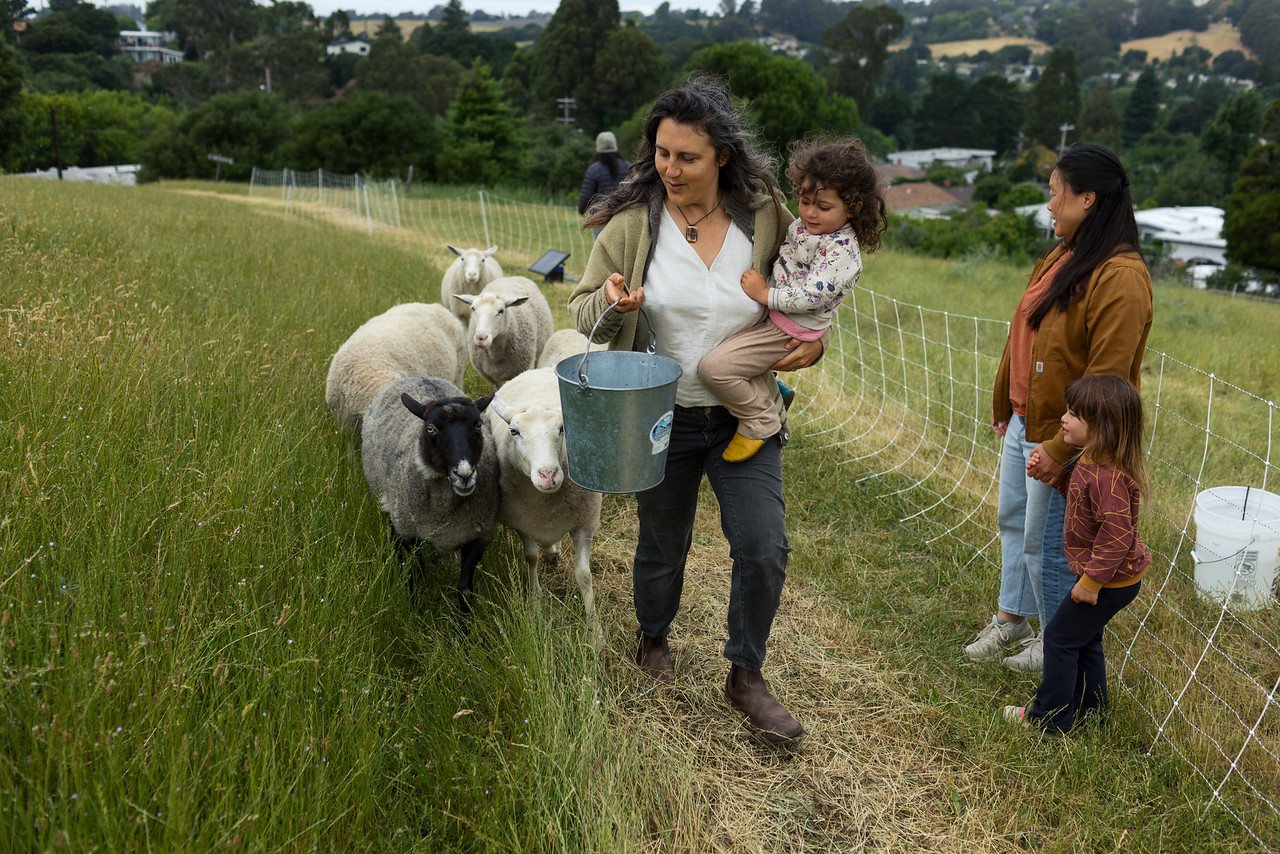
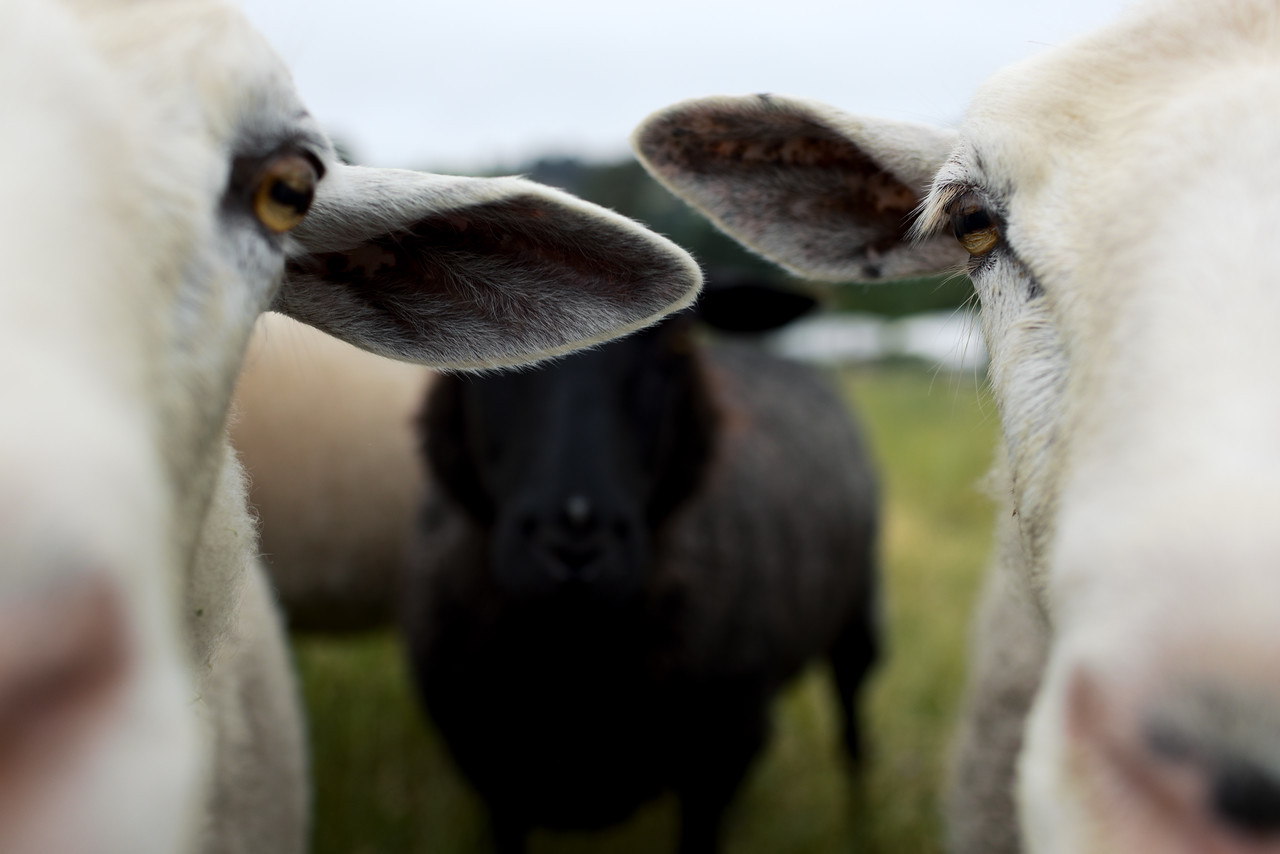
At Wildcat Canyon Community School in El Sobrante, California, the classroom extends well beyond four walls. Nestled in the East Bay hills, this K-8 Waldorf-inspired school centers on the idea that children learn best when they’re engaged, getting hands-on, and connecting to the living world around them. Here, students spend a great deal of their time outdoors, learning, playing, working in the garden, and increasingly, getting to know a flock of Icelandic sheep that has become a delightful and functional part of life on campus over the last four years.
Erin Axelrod serves as Land Steward at Wildcat Canyon and has lived on the 91-acre property since 2021. Erin sourced the seven grey-and-white sheep from a friend and moved them onto the campus in early 2022. She and her partner do the shearing, and the fleece is turned into roving: soft bundles of washed and carded fiber ideal for a variety of crafts. That roving is used throughout the school year under lead handwork teacher Melanie Hatch. Handwork, alongside woodwork and clay, is one of the three material arts at the heart of a Waldorf education. In first grade, the children learn to knit small toys: rainbow balls, bunnies, or kitties, all stuffed with roving from the flock. By third grade, the kids are ready for something more ambitious. Starting with a fresh fleece, the class sorts, scours, cards, spins, and dyes the wool before weaving it into a small bag, a project that can take months from start to finish. Melanie stresses that the process matters as much as the finished product, providing a valuable lesson in celebrating imperfection and embracing delayed gratification. “When you make something yourself, you might be disappointed that it’s not perfect,” she explains. “But when you see that it’s useful, and people love it, and you love it, all of a sudden we can handle more imperfection in ourselves as well.” In sixth grade, students design and construct three-dimensional elephants stuffed with the same roving, drawing their own patterns from observation. By seventh grade, they’re making fully articulated Waldorf-style marionettes, their heads compressed wool and their limbs structured with roving-wrapped “bones.” It’s a curriculum built as much around gaining self-knowledge as building skills.
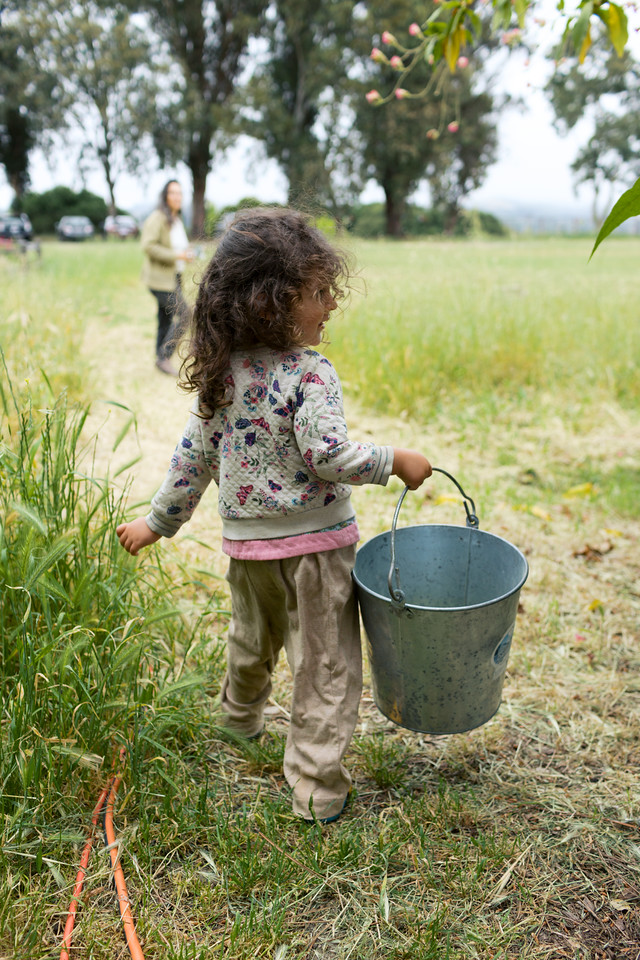
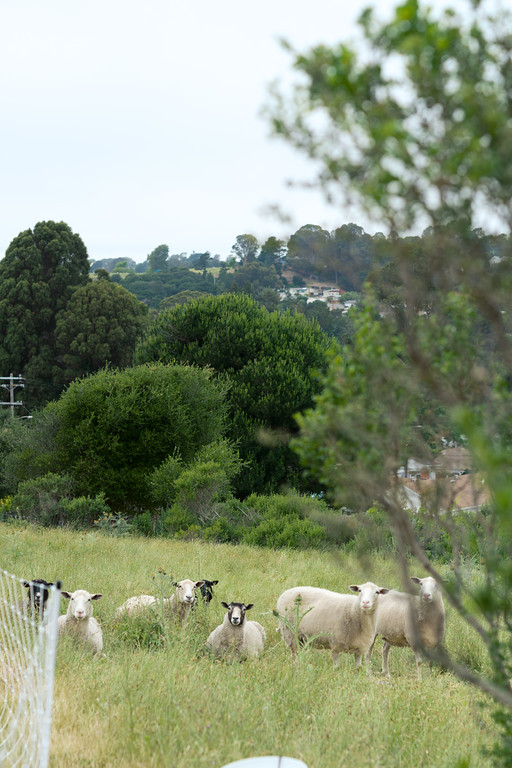
Having the sheep on campus cultivates a sense of place and purpose that’s too often missing from our modern, convenience-oriented culture. “We’re not getting wool from Germany or Nebraska,” says Melanie. “Wool is something that we have. So the question becomes, how can we best use it? It’s this very practical way of being with material, with ourselves, and with each other and finding satisfaction and contentment in that. Instead of ordering it from somewhere else, you can use what’s right here in your fibershed, or in your watershed, or in your foodshed.” It also transforms the wool from a simple raw ingredient into a rich, complex relationship. “Students get introduced to the sheep as young people and then actually start caring for them in third grade in some small ways,” she explains. “They bring them treats, they see them getting loose, and they watch their hair grow steadily longer, until it’s time to use it. There’s a practicality and a groundedness to that. They experience this sense of place, and they experience the give-and-take of what it is to care and provide for something that creates a reciprocal relationship.”
The sheep have also had a beneficial impact on the land itself. When Erin first brought them to the property, one of her concerns was the local abundance of poison hemlock. She reached out to her permaculture teacher, Penny Livingston, who shared a story about grazing dairy goats on hemlock for years. Not only did the goats thrive on the forage, but Penny even drank the milk they produced with no ill effects. Reassured, Erin let the herd loose on a small test patch. “Not only were they fine, they devoured it,” she says. Over time, the flock has helped transform sections of the campus once dominated by hemlock into diverse, thriving grassland, an ecological shift achieved through the instincts of hungry ruminants instead of machinery or chemicals. “There are no accidents,” Erin says, echoing the work of researcher Fred Provenza, whose writing on foraging behavior informs her approach. “Animals really have retained the sense of what’s good for them that we’ve lost.”
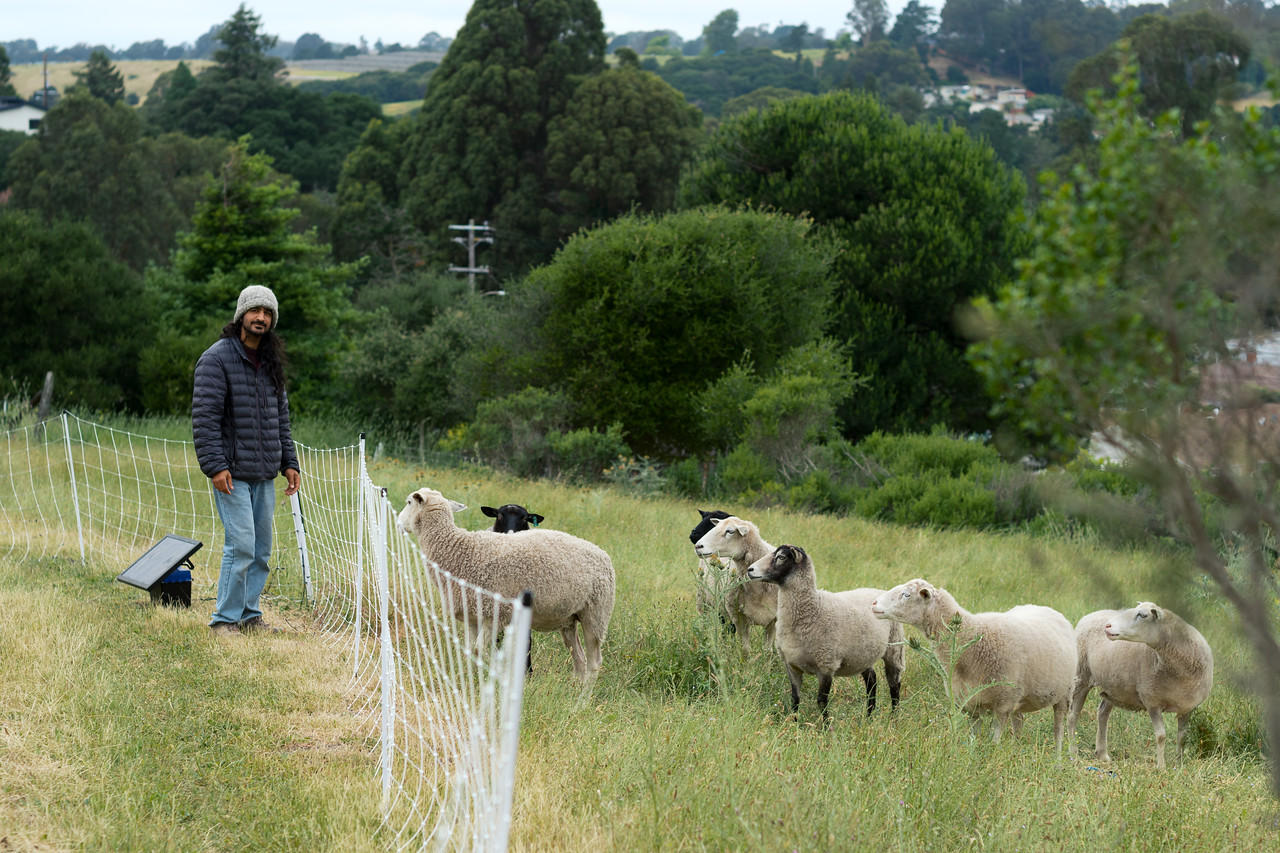
Right now, grazing is managed with portable electric fencing, which Erin’s partner moves regularly to rotate the sheep through different areas. It’s effective but labor-intensive, and navigating the electrified wires can be a bit daunting for some. The next goal is to build permanent paddocks that would provide easier access to the animals at strategic times of year. The longer-term vision is more ambitious: a full carbon farming and grazing program in which students would help manage the flock’s movements, calculating paddock sizes in math class and learning firsthand how thoughtful animal husbandry can help restore land and mitigate climate change. “It’s really humbling for us to think about how we could evolve our grazing program,” Erin says. “I’m in awe of all of the nuance and intellect it takes to listen to the animals and really co-create a carbon-sequestering plan for their movements that mimics their innate knowledge.” In the meantime, the sheep continue chewing away quietly above the East Bay suburbs, doing their part one mouthful at a time.
That the sheep are making an impression on families is clear. At the Transhumance Festival in Petaluma this past year, Erin found herself volunteering next to a woman who, as it turned out, sends her children to Wildcat Canyon. As they got to talking, the parent mentioned that seeing the sheep on campus had been one of the reasons she chose the school. “She told me, ‘It is so core to our values to be around animals and to really instill the value of animals on the landscape in our family life,’” Erin recalls. She suspects there are more stories like this one out there just waiting to be heard, from families drawn to an educational environment that prioritizes appreciation of what grows and grazes right outside the classroom door. Seven sheep on 91 acres might seem small, but at Wildcat Canyon, small things have a tendency to flourish.