


Written by Stephany Wilkes. Photography by Paige Green.
Ryan Mahoney’s family arrived in Rio Vista, California in the 1870s, not long after the Great Flood of 1862 dumped ten feet of water in 43 days. That event moved Rio Vista to its present-day location, where a vertical-lift truss bridge now carries California State Route 12 across the Sacramento River. Richard “Dick” Emigh, Ryan’s grandfather and ranching and shepherding mentor of 20 years, was born in Rio Vista in 1929, shortly before natural gas was discovered there in 1936. The Rio Vista Field has operated continuously since, but so have the land stewardship and carbon sequestering practices of the Emigh family.
These cherished values are now embodied in fifth-generation rancher Ryan Mahoney. He hopes to have the family’s sixth and seventh generations on the land and stewards it accordingly, in partnership with nature. Mahoney bought the family-run company five years ago, which has 20 employees. “I’m out there every day,” he says.
“My grandfather gave us a jumpstart on carbon farming,” Ryan explains, referring to the 20,000 acres that now sequester 2,500 metric tons of CO2 per year. “There was originally grain farming, but yields dropped along with soil nutrients. We stopped farming twenty years ago to go to pasture rotation with cattle. We moved away from commercial fertilizer in the mid-2000s, and my grandfather was big on developing water trough systems.”
Water management and climate resilience are inseparable. Water troughs keep livestock from drinking out of stock ponds and streams, preventing erosion – and thus soil-carbon emissions – and keeping water clean. Practices that optimize both water usage and carbon dynamics include wetland conservation, sustainable agriculture, agroforestry, and riparian zone protection. Emigh Ranch’s water troughs are powered with wind and solar. The sheep graze beneath massive windmills, the first of which were installed in the 1900s.
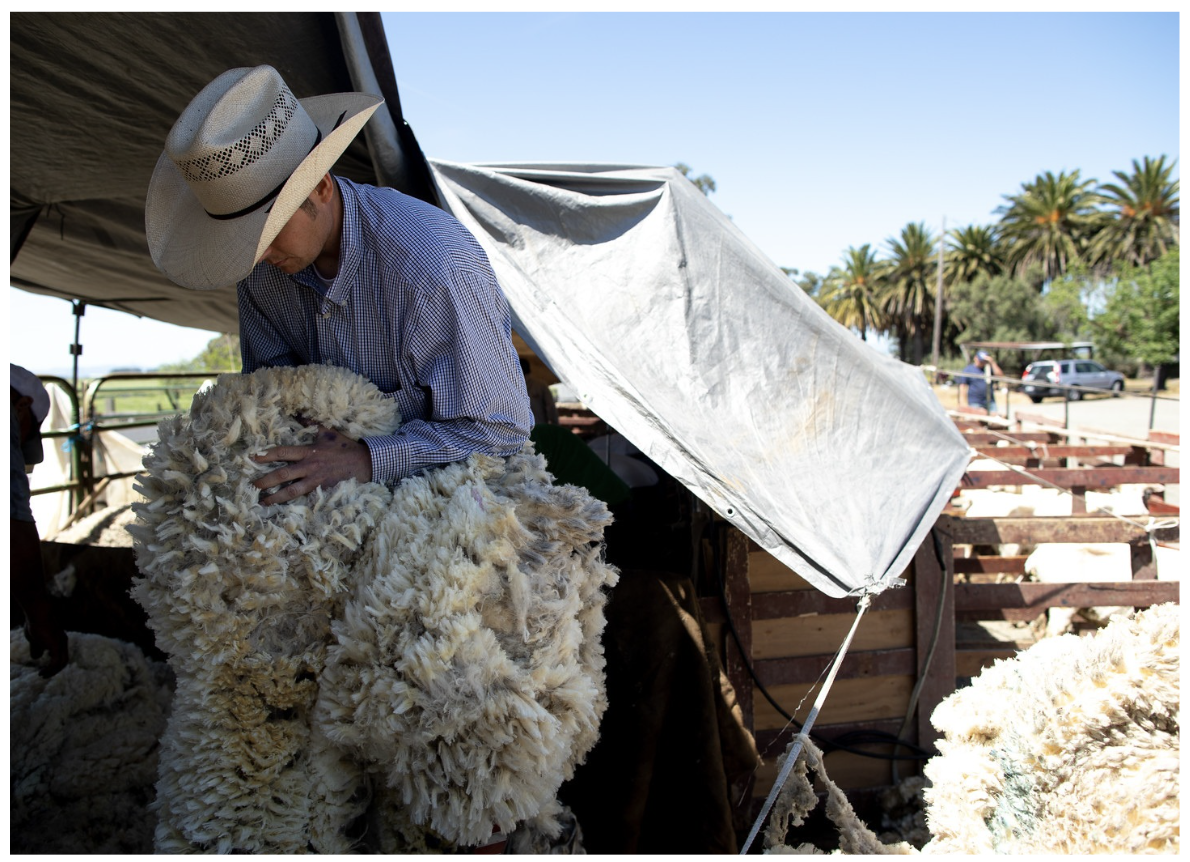
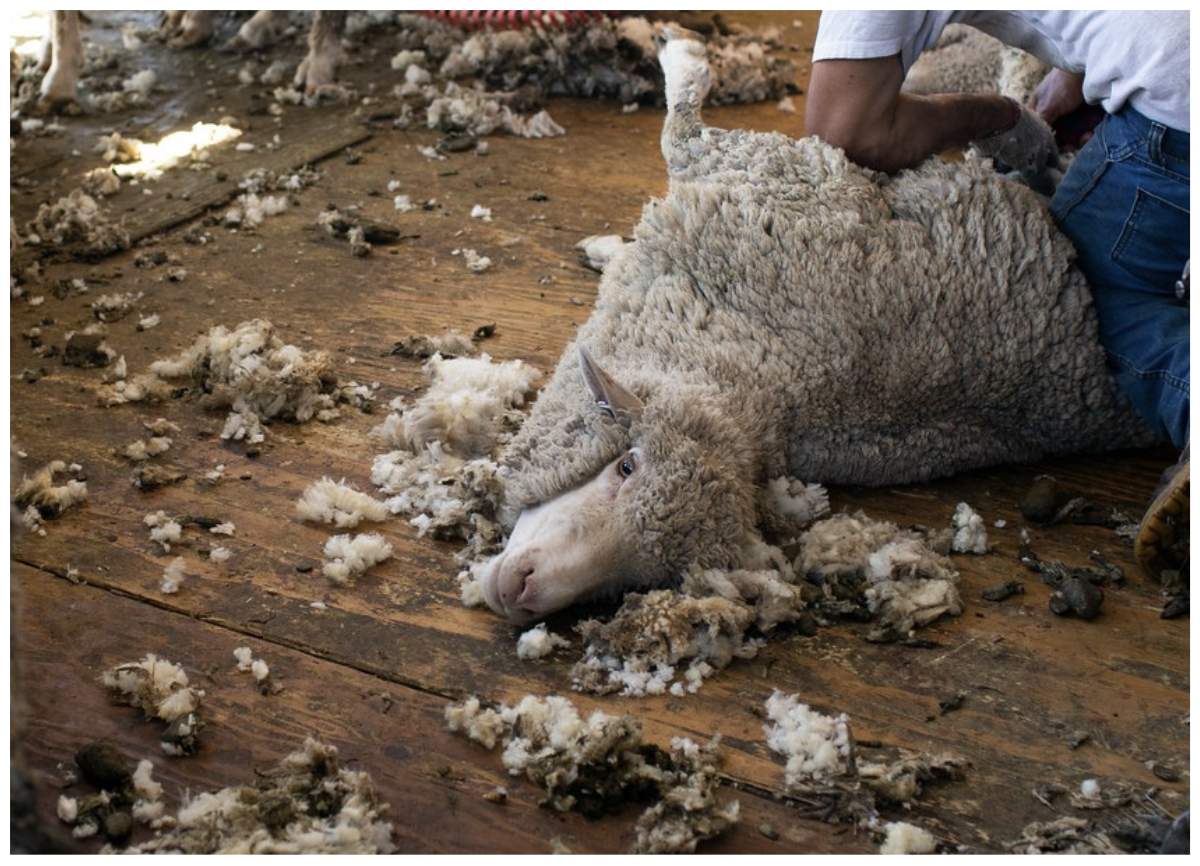
“We always had sheep but didn’t always have wool,” Ryan says. In addition to providing beef for Snake River Farms and lamb for Niman Ranch and Superior Farms, Ryan started Emigh’s Fine Wools two years ago. It is a scrumptious, all-American yarn line with various weights and brilliant colors, and some ready-to-wear beanies as well. “In 2023, Grandpa passed away in a blanket made from his wool. It was the first time in eighty, ninety years of wool growing that he had that. It’s meaningful.”
Ryan began working with Fibershed about eight years ago, and with the Solano Resource Conservation District (RCD), which helped Emigh Ranch develop a carbon farm plan (CFP). Carbon farm plans describe ways to increase a working ranch’s capacity to capture carbon from the atmosphere – which has too much carbon dioxide – and to store it beneficially, as in grasslands and soil organic matter. Emigh Ranch uses livestock management software that allows for record keeping on pasture management, rotation, rest periods, and carbon farm plan practices and benefits. Their wool is certified Climate Beneficial.
“Our goal is to capture what we did, not look great,” Ryan says. “I tend not to follow buzzwords. Look at the quality of the product itself. Health and wellbeing is directly related to the product. Fine, strong, long, uniform fiber reflects a good operation caring for sheep well. Don’t get wrapped up in a sales pitch. A lot of certifications are meaningless, like ‘non-hormone.’ Hormones are illegal in the U.S. If you do it, you lose your sheep and go to jail. ‘Grass fed’ is a legitimate label, but in some cases it is so loosely regulated as to mean that an animal can be on a grain diet for 90 days or less, prior to slaughter. So people slaughter at 89 days of grain feeding and put the ‘grass fed’ label on it. That is in contrast to what Loren Poncia is doing at Stemple Creek, for example. They do an excellent job, in terms of both attention to the animals and to grass growing, but other people do not have Loren’s integrity. And you see it in the finished product: his beef is higher yield with higher marbling. We need to get back to trusting each other, to building relationships. We’ve lost a lot of trust and are letting marketing, rather than quality, drive our decision making.”
Ryan also wants to help new producers get started, and understands that everyone doesn’t have the benefit of generations-spanning relationships with experienced ranchers like his grandfather. To that end, Ryan shares his knowledge as one of the three hosts of the Sheep Stuff Ewe Should Know podcast, along with UC Davis livestock veterinarian Dr. Rosie Busch and Dan Macon, livestock and natural resources advisor for the UC Cooperative Extension.
“The podcast is great for new producers,” Ryan says. “My goal is to help anyone starting out. It’s kind of old school, sharing that knowledge on the other side of the wall. It’s intentional conversations between the three of us but available for anyone in industry. Hopefully the podcast will inspire someone to get sheep and run them.”
Co-host Rosie Busch says, “Ryan is very even tempered and thoughtful in his way about many things. Especially the livestock. I believe it comes from his life-long mentorship with his grandfather, Dick Emigh. A great shepherd that can walk through his flock without disturbing even the birds around him. He takes in the scene, reflects, and with a quiet, calm, and patient demeanor, he considers a steady and measured approach to almost all situations. He is calculated. Not without risks, but he understands that growth and improvement doesn’t come without risk. His way with the livestock is an artform. And their health and wool quality is a reflection of that care. His wool is incredible! My daughter loves her ballet wrap sweater I made with it. She wears it twice a week to ballet.”
Co-host Dan Macon added, “Ryan is one of those unusual producers who keeps track of his wrecks so he can learn from them. Like all of us, he makes mistakes – what separates Ryan is his ability to think through how to avoid similar mistakes in the future.” Words for all of us to live by.
So what’s next for Ryan and Emigh Ranch? “Habitat development, hedgerow planting,” he says. “Some of the best things to do, if you want to sequester more carbon, is to look for more ways to incorporate organic matter into the soil. The easiest way for most people to do that is by applying some sort of compost product. Focus on hedgerow planting, water management, and rotating grazing livestock with special attention to rest days.”
At risk of planting words in Ryan’s mouth, I can’t help but remark that he sounds that rarest thing in our always unprecedented, challenging times: hopeful.
“I do have a lot of hope,” Ryan says. “The U.S. consumes most meat and textiles. We live in the market that’s the best.”